



Following the first two rounds of fixtures, we discuss which countries have progressed since the World Cup and those who need to start from scratch
England have mastered the art of the impact sub
While it was Stuart Lancaster’s over-eagerness to tinker with his starting line-up that ultimately lost him his job, it was his inability to change a game midway through that was the most damning aspect of a disastrous World Cup campaign.
In their two pivotal pool games, England saw a position of control against Wales slowly ebb away before failing to find a foothold against Australia one week later.
In both matches, Lancaster looked to his bench to try and shift momentum but to no avail.
Yet it is a conundrum that his successor Eddie Jones appears to have cracked already.
Given the increasing physical demands of modern-day rugby, shuffling personnel is now a necessity rather than a luxury that more often than not will decide which way a tight Test match goes.
In their two matches so far, England have led by one and two points at half-time before running out comfortable winners on both occasions, thanks mainly to some shrewd substitutions.
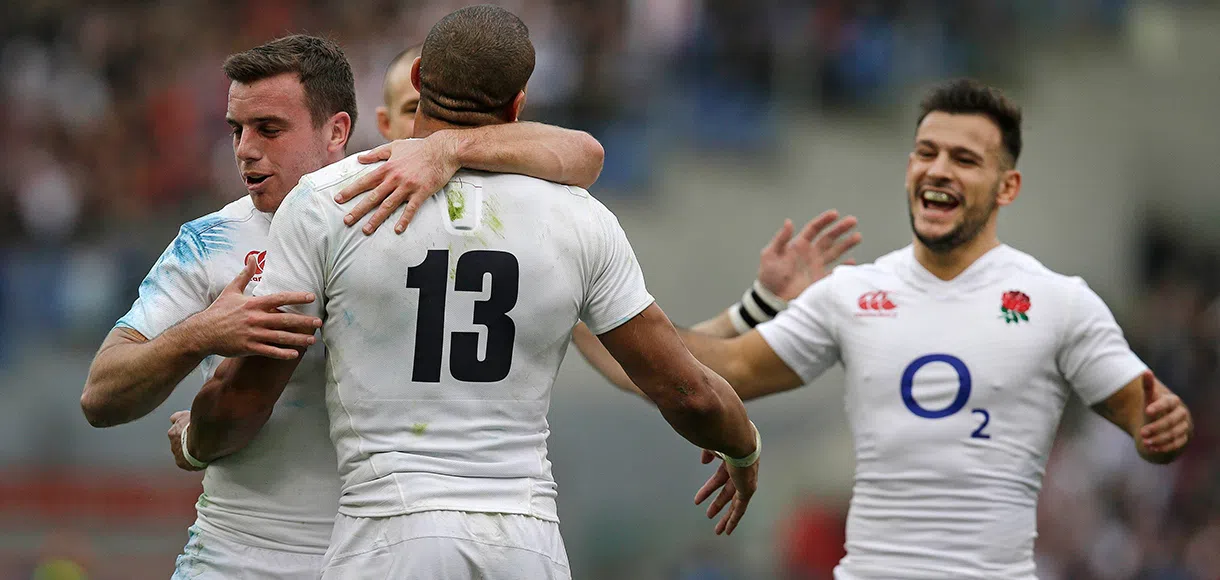
Danny Care, Joe Launchbury and Jamie George each played a key role in creating three of the four tries that England scored during the final 27 minutes in Rome.
The injection of energy that they and others brought meant that the visitors made twice as many metres and three times the number of offloads in the second half than they had done in the first.
The sleight of hand of new arrival Mako Vunipola, meanwhile, opened the door for Jack Nowell’s match-winning try at Murrayfield.
With youngsters Maro Itoje and Jack Clifford also being used in cameo roles as they acquaint themselves with international rugby, England have the makings of a rich and varied squad.
By learning how to make the most of it within 80 minutes, Jones is giving England the ability to think on their feet when just four months ago they were falling flat on their face.
Scotland have forgotten how to win The circumstances surrounding Scotland’s agonising World Cup exit – when referee Craig Joubert awarded a late penalty in error to Australia to win the game before sprinting from the pitch after blowing the final whistle – were unique.
The events leading up to that fateful moment, however, were not.
In the pouring rain and with a two-point lead to protect, Scotland inexplicably chose to throw a last-minute lineout to the back.
Unsurprisingly, the ball was fumbled – prompting a mad scramble and decision from Joubert that could always have gone either way.
It was indicative of the lack of leadership and clear thinking under pressure that continues to prevent Scotland from winning matches.
Against England, they were always in touch but could not convert their possession, territory or chances into scoreboard superiority.
In Cardiff they had the lead with 17 minutes to go but once again failed.
Scotland have now lost their last nine Six Nations matches in succession.
The fact that six of those defeats have been by a margin of seven points or less suggests the problem is mental rather than technical.
Vern Cotter hinted that his side will revert to a more conservative game next time out against Italy, who might eventually get rid of their record of 14 consecutive losses with a win of their own.
But Scotland need to remember how to win games by showing bravery with ball in hand rather than plain old brawn, which will only ever be enough against relative minnows given their limited pool of players.
Their last win against a Tier 1 nation that was not Italy came 15 months ago at home to Argentina.
In their current state, it is difficult to see where the next one might come from.
France are up for the fight France might have scraped home wins against two struggling sides so far, but there was still something reassuring about the nerve-wracking nature of those victories.
As the cliché goes, it is not flair where the French can often be found wanting, but rather fight for the battle.
Les Bleus have been required to dig deep so far, first by a spirited Italy looking to thrill followed by a determined Ireland seeking to frustrate, and found a way to get over the line on each occasion.
With four points on the board and a points difference of +3, the 2016 Six Nations table already looks better for France than it did at the end of last year’s tournament.
Their 62-13 defeat to New Zealand four months ago – the biggest hiding ever dished out in the knock-out stages of the Rugby World Cup – was the nadir of a frustrating five years since they last lifted the Six Nations trophy.
Following the divisive and unpopular periods at the helm of Marc Lievremont and Philippe Saint-Andre, the French finally have the coach they have been clamouring to be in charge for most of the past decade.
With four Heineken Cups and nine Top 14 titles to show from two decades at Toulouse, Guy Noves knows how to create crushingly consistent teams.
And with the combative 62-year-old sure to demand the same exacting standards of his new charges, the days of wondering which French side will turn up look to be behind us.
Ireland have lost their ruthless streak Much has been made of Ireland’s chronic lack of creativity, but that has hardly hindered the defending champions’ up until now.
Joe Schmidt’s side lifted the trophy last year despite scoring just eight tries, four of which came in a 40-10 thrashing of a sorry Scotland side on the final day.
That meagre tally was fewer than England, Wales and France and the same number as lowly Italy, but it still did not stop them from claiming a second consecutive title.
Ireland’s recent gameplan has been based on putting teams on the back foot with their relentless rucking game and then denying them the chance to recover with merciless tactical and territorial kicking.
During the 10 victories that secured their first back-to-back championship wins in 66 years, Ireland fell behind on the scoreboard just once – to a first-minute penalty in Paris in 2014 that was quickly wiped out.
Yet that doggedness has now disappeared.
They have just one point to show for 13-0 and 9-3 leads against Wales and France respectively – meaning an unprecedented third consecutive title now looks impossible.
Retirement and injury has not just robbed them of quality personnel, but also the fortitude upon which their recent success has been built.
‘Warrenball’ still works If Ireland’s clout is waning, then it is fair to say that Wales’ still packs plenty of punch.
Warren Gatland’s attritional approach has often been mocked for its lack of expansiveness, but there can be no denying the devastating effectiveness of his uncomplicated formula.
Two Grand Slams, a third Six Nations championship and a victorious Lions Tour speaks for itself.
Based upon a powerful front five, an energetic back row, direct midfield runners and speedy wingers to take advantage of the holes that inevitably eventually appear trying to withstand the barrage – in many ways it is rugby in its purest form.
Crucially, its simplicity allows his team to win – or, as seen on the first weekend against Ireland, draw – even when not playing well.
Still unbeaten and with a home game against France – against whom they have not lost since 2011 – and another trip to Twickenham just a few months after their World Cup heroics at the same venue to come, Gatland can be confident of a third title in five years.
Since being appointed at the end of 2007, the Kiwi has seen off 11 different coaches from the five other Northern Hemisphere nations as each of Wales’ rivals try and take a new direction.
Gatland, meanwhile, keeps ploughing down the same path and making the most of his headstart on all the rest.
READ: Mike Tindall: England’s fresh start now hinges on banishing unhappy Twickenham memories
READ: The greatest title of them all: Who tops the all-time Six Nations table?