


Find out how the English football pyramid works, right from the Premier League to non-league football and the women’s game, including promotion and relegation.
The English football pyramid is one of the most well-known and competitive league systems in world football. From the global spotlight of the Premier League through to regional semi-professional divisions and grassroots clubs, the pyramid connects thousands of teams through a system of promotion and relegation.
Unlike closed league systems used in some countries, the English football league pyramid allows clubs to move up or down divisions based on performance each season. That structure creates opportunities for smaller clubs to climb through the ranks whilst bigger teams risk relegation if results go against them.
Read on to find the football pyramid explained in depth, including the structure of the men’s and women’s game, how promotion and relegation work, and the leagues that make up the wider English football pyramid system, and make sure to visit our football betting page for odds covering the entire game.
What is the football pyramid?
The football pyramid is the tiered structure used to organise football leagues in England. Teams compete within divisions at their current level, with the best-performing clubs promoted to a higher tier and the worst-performing sides relegated below.
The system creates a direct pathway from local amateur football through to the professional game. In theory, even a small club can rise through the divisions over time if it consistently earns promotion and meets league requirements.
While the men’s system stretches well beyond ten tiers and includes hundreds of leagues, the women’s pyramid is smaller but continues to grow rapidly alongside the popularity of the women’s game.
The men’s English football pyramid structure
The men’s English football pyramid system is split into professional, semi-professional and amateur divisions. The top four tiers are considered the fully professional divisions of the English game, with the National League system and regional leagues further down the structure.
Premier League
The Premier League sits at the top of the English football pyramid and is widely regarded as one of the strongest and most commercially successful leagues in world football.
The division contains 20 teams, with every club playing 38 league matches across the season. Teams receive three points for a win and one for a draw, with the side finishing top crowned Premier League champions.
At the end of the campaign, the bottom three teams are relegated to the Championship. Clubs near the top of the table can qualify for UEFA competitions, including the Champions League, Europa League and Conference League depending on league position and domestic cup results.
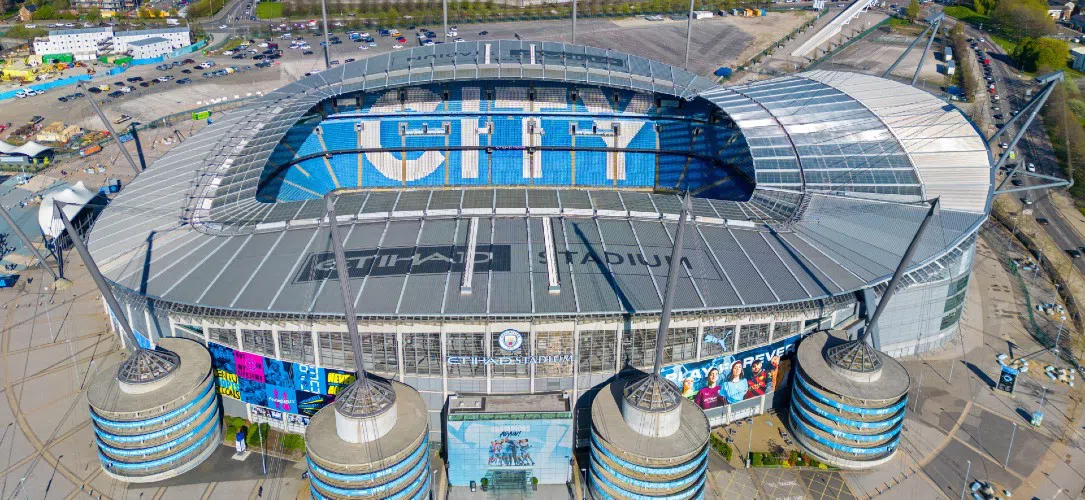
The Premier League attracts elite players and managers from around the world and includes many of English football’s biggest clubs, including teams such as Manchester United, Manchester City, Liverpool, Arsenal and Chelsea.
English Football League
Below the Premier League is the English Football League (EFL), which is split into three divisions: the Championship, League One, and League Two.
Together, these divisions make up tiers two to four of the English football league pyramid.
Championship
The Championship is the second tier of English football and widely considered one of the most competitive leagues in Europe.
The league contains 24 teams, each playing 46 matches during the season. The top two clubs are automatically promoted to the Premier League, and the teams finishing third to sixth (set to expand to third to eighth from the 2026/27 season) enter the Championship playoffs for the final promotion place.
At the other end of the table, the bottom three teams are relegated to League One.
The financial rewards associated with Premier League promotion make the Championship particularly intense, with clubs often investing heavily in pursuit of promotion.
League One
League One is the third tier of the English football pyramid system and also features 24 clubs.
The top two teams earn automatic promotion to the Championship, while clubs finishing third to sixth compete in the playoffs. The bottom four teams are relegated to League Two.
League One contains a mix of historically large clubs rebuilding after relegation and smaller sides aiming to continue climbing the pyramid.
League Two
League Two is the fourth and final fully professional division within the EFL structure.
As with the divisions above, 24 teams compete across a 46-game season. The top three clubs are automatically promoted to League One, and the teams finishing fourth to seventh contest the playoffs.
The bottom two teams are relegated into the National League, making League Two the gateway between the professional game and non-league football.
National League
The National League system sits below League Two and represents the highest level of non-league football. It’s the fifth tier of the English football pyramid and includes 24 clubs.
The league champions earn automatic promotion to League Two, while teams placed second to seventh enter the playoffs for the second promotion spot. The bottom four clubs are relegated into the regional sixth-tier divisions.
Many former Football League clubs compete in the National League, alongside ambitious semi-professional teams hoping to reach the EFL.
National League North and South
Tier six is split geographically into the National League North and National League South.
Each division contains 24 teams, with the champions earning automatic promotion to the National League. Additional promotion places are decided through playoffs, and multiple clubs are relegated into regional leagues below.
This regional split helps to reduce travel costs for clubs operating outside the fully professional game.
Tier 7
Tier seven includes divisions such as the Northern Premier League Premier Division, Southern League Premier Division Central, and Southern League Premier Division South.
These leagues continue the regional structure and feature clubs from across England competing for promotion into the National League system.
Tier 8
Tier eight expands further into regional football and includes divisions feeding into tier seven. Clubs at this level are often semi-professional and rely heavily on local support and volunteer involvement.
Tier 9
Tier nine consists primarily of county-based and regional leagues. Whilst standards vary, clubs still compete within the wider promotion and relegation structure of the English football pyramid system.
Tier 10
Tier 10 represents another major grassroots level within the pyramid. Although clubs at this stage are far removed from the Premier League financially and structurally, they remain connected through the same footballing framework.
The women’s English football pyramid structure
The women’s game also operates within a pyramid structure, although it’s smaller than the men’s system.
Women’s Super League
The WSL is the top tier of women’s football in England and contains 12 clubs.
The league has grown significantly in popularity and professionalism in recent years, attracting international stars and large attendances.
Whilst the bottom club is relegated to the Women’s Championship, top teams qualify for European competition.
Women’s Championship
The Women’s Championship is the second tier of the women’s game.
Promotion and relegation operate between the WSL, the Women’s Championship and the National League structure below, although clubs must also meet licensing and facility requirements.
Women’s National League
The FA Women’s National League includes a Northern Premier Division and a Southern Premier Division, followed by regional divisions beneath them.
This structure allows clubs across the country to progress through the women’s football pyramid while maintaining regional competition.
FAQs: The English football pyramid explained
How many teams are in the English football pyramid?
The exact number changes slightly over time due to league restructuring, promotions, relegations, and club withdrawals, but the system includes thousands of clubs across all recognised levels.
How many leagues are in the English football pyramid?
The English football league pyramid contains numerous leagues across different tiers and regional structures. Whilst the top levels are nationally organised, lower tiers branch into regional and county competitions.
How does the women’s football pyramid work?
The women’s pyramid uses the same core principle as the men’s game, with promotion and relegation connecting divisions. Clubs can move between leagues based on results and league requirements, allowing teams to progress toward the Women’s Super League over time.