



Everyone likes to get new things at Christmas, and nobody knows that better than developers...
Perhaps that’s why Valve dropped a massive festive package for Dota 2 fans, in the form of a sweeping update.
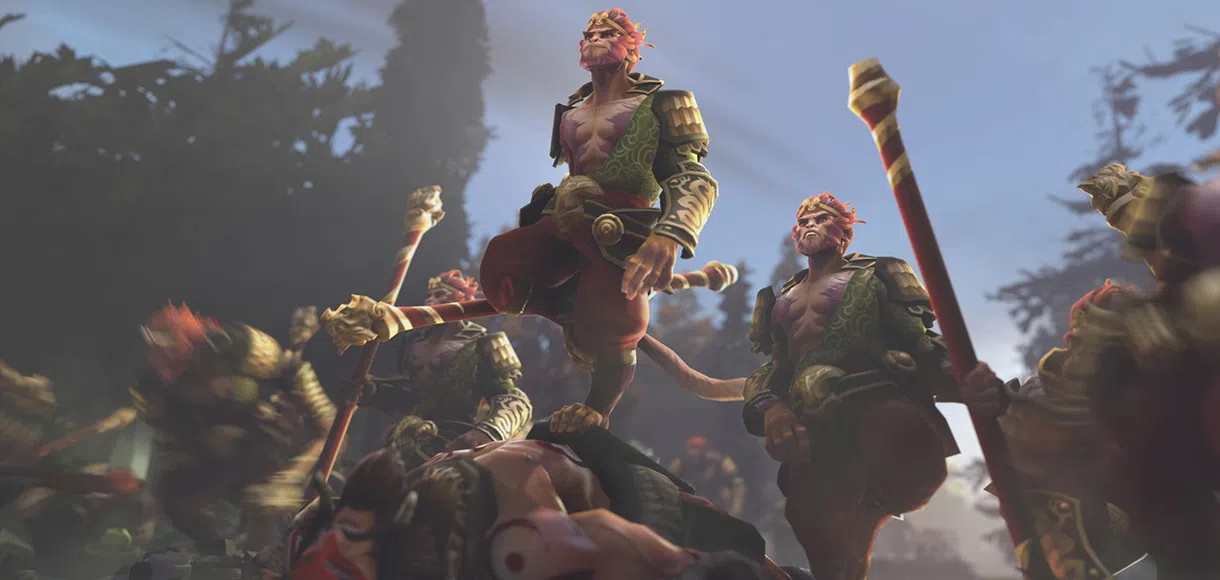
In Patch 7.0, Dota 2 got a real shock to the system. The headline gift to the faithful was meant to be the long-awaited new character, Sun Wukong, the Monkey King.
However, perhaps more far reaching are the gameplay changes.
Everything from item reworks (most notably Helm of The Dominator, Drums of Endurance, Mask of Madness, Satanic and Rod of Atos ) to map changes have given the game a whole new feel.
There’re two really big elements to take in: the introduction of Hero Talent Trees, and the numerous adjustments to the maps.
Talent trees – the seeds of power?
The Hero Talents are a pretty major inclusion, granting every hero extended ways to interpret their roles and take part in the game. Here’s what Valve have to say about it:
“Every hero has gained a series of Hero Talents that players can select at levels 10/15/20/25, offering powerful augmentations to their capabilities… Each level offers unique branches, and bypassed branches are not available at future levels. Each hero has their own unique set of Talents to choose from.”
Valve are effectively enabling players to customise and specialise their hero to better suit their strategy. For instance, Shadow Fiend’s talents can offer him either more attack power, or more health and evasive power.
This adds a deeper level of variety to complement an offensive or defensive playstyle – it can effectively alter the dynamic of the game.
It’s also worth noting that the powerful bonuses available at level 25 seem designed to prevent endgame deadlocks, handing heroes such as Wraith King more capacity to break stalemates.
These changes also seem intended to help supports into the late-game, with many support Talent Trees granting more survivability and XPM/GPM boosts at the earlier levels, but better damage at levels 20 and 25.
This allows supports to use riskier tactics, and, coupled with the greater emphasis on map control, should encourage more roaming supports.
Time to redraw the map
Speaking of the map, it has undergone quite the transformation. For a start, Roshan is moving upriver, and getting less health, more armour and a greater attack range.
A new building type, Shrines, have also been introduced, their most prominent placing being next to each teams secret shop, and by new ancient camp locations.
Shrines provide a 500 AoE aura, granting health and mana regeneration after a cooldown time of 5 minutes and can also be teleported to giving ease of access to key areas of the map.
Destroying them will grant all allied heroes with a bounty of 150 gold; but this is no mean feat.
They have invulnerability until Tier 2 towers have been destroyed; plus they have the same health as melee barracks, but higher armour.
The value Shrines bring to the game can also be measured through the better map control that they enable, the accessibility to Rosh and the post-Rosh push.
Before patch 7, the position of the Rosh pit gave the Radiant more of an advantage once Rosh was taken, in terms of push opportunities.
On the other hand, the Dire did benefit from quicker entry to the pit; but Rosh’s new domain puts an end to the Radiant/Dire advantage argument.
Shrines also provide increased defence for the outer towers, and safe lane jungle stability, but players will need to consider the opportunity for gains vs regen carefully.
One big advantage for the Jungler is that potions are no longer dispelled after taking creep damage, which means farming while invisible is now definitely a thing.
As well as this, jungles have been altered, paths have been reworked, and places such as hiding spots, ward spots and juke paths have been rejigged.
There are also two new Ancients – Prowler Acolyte and Prowler Shaman – seeking residence in a new Ancient neutral camp, which spawns two of the former and one of the latter. Interestingly, Ancients are no longer spell immune.
Generally, there will be more emphasis on jungle rotation. Whereas resources are more plentiful in 7.00, respawn times have been lengthened to two minutes.
The lack of lifesteal on Helm of the Dominator also puts more pressure on support heroes to efficiently prepare the jungle to gain a farm lead, though the addition of Shrines could balance this out somewhat.
So, what else is new?
Besides the map changes and Hero Talent Tree, there is one more major gameplay addition: the backpack.
The backpack allows heroes to carry three additional items, however they can’t be activated, nor do they provide any bonuses. Useful for carrying items to instantly complete recipes, though.
The biggest winners from the backpack will probably be for the support role. Carrying items like smokes and wards without needing a free inventory slot allows them make an even greater impact on the game.
In fact, a significant portion of these game changes point to enabling greater impact for supports. Higher survivability, better roaming abilities, the addition of more bounty runes all aid the scaling of the support into the late game.
But how will all this affect the overall game experience? It’s clear the alterations are geared towards team orientated combat, a faster pace, and more significance on roaming and defensive attacking.
Consider the new skill trees, XP/gold gains from illusions, shorter mid-game respawn times, or the fact that less overall experience is required level to level. All of these things point to a less conservative style of gameplay.
These changes will alter the meta significantly but we’ll cover this in a later blog. For now we’re excited to see how the teams adapt.