



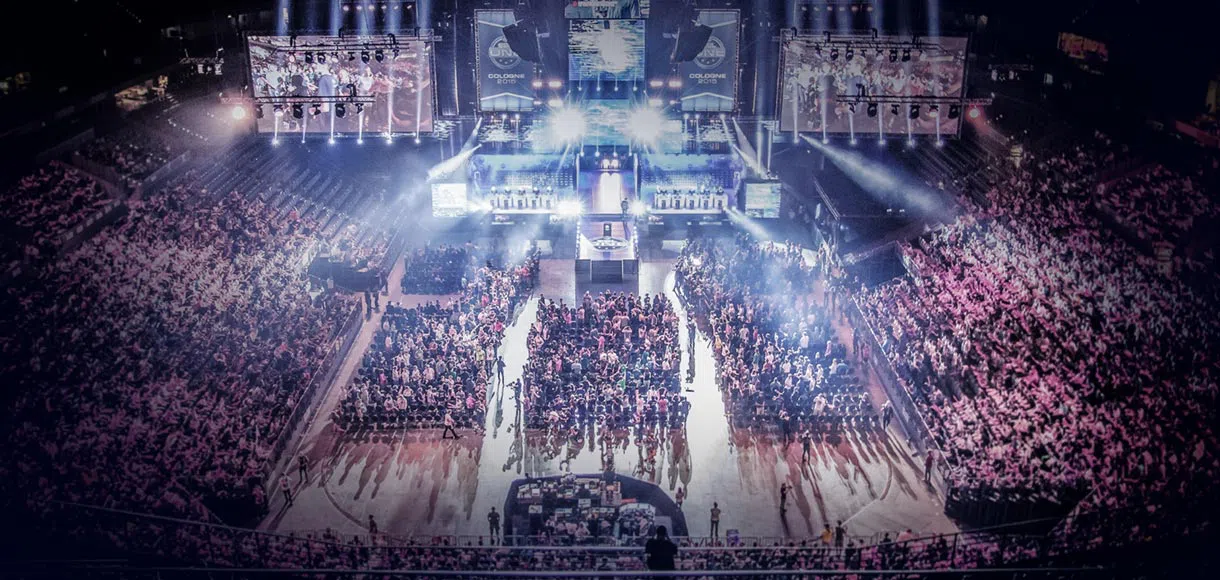
Another year, another success story for eSports...
It’s been a thrilling 12 months for this maturing industry, and there’ve been many exciting and exceptional moments.
There have also been some truly significant developments that could have profound effects on the scene. We take a look at some of this year’s most momentous markers.
The SK Telecom T1 dynasty: Making League of Legends history
This was the year that SKT Telecom T1 really did emerge as the one true dominating force in LoL.
Duke, Bengi, Faker, Bang, Wolf and Blank led SKT to lift the Summoner’s Cup for a third time and become the first team to win twice in a row.
All this after already being the only team to have won Worlds twice.
For anyone who has followed the trials and tribulations of long-time comrades Faker and Bengi, it was an emotional victory.
The duo has now held the cup three times and is easily the most accomplished pair in LoL history. Following close behind, Wolf and Bang are also entering the elite circle, having won Worlds twice.
With three Korean teams in the tournament’s final four, you wouldn’t be punished for thinking that South Korea is the one true LoL superpower.
It’s time to say goodbye: KeSPA shuts down Starcraft ProLeague
Hands down one of the biggest tragedies of this year – perhaps even in eSports history – is KeSPA closing its doors to Starcraft II.
The founding father of the world’s first professional team-based eSport, StarCraft ProLeague will end its competition after 14 years.
The longest running league in eSports history, its closure sadly not only marks the end of an era, but also the fading of a game that sparked the modern eSports revolution.
The news hit in October when KeSPA’s chairman, Jun Byung-hun, explained that the decline in players and teams had made keeping the league alive increasingly hard.
He added: “We hope that StarCraft ProLeague will live on in the memories of its players, fans, and all affiliated parties as an invaluable asset that pioneered the eSports industry.”
We can’t help but predict a bleak future for Starcraft II after the loss of its core lifeline: the Korean scene.
Challenging Standards
2016 has seen the start of a welcome shift towards better player representation and welfare.
Over the past year, more space has been created for the ‘player’ as an individual bearer of rights, as well a rise in player-owned organisations.
Now, with the volume on their mic turned up, and with the help of some prominent eSports figures, players have made their welfare a hot topic.
Unlike the case of Marcin “Kori” Wolski back in 2015, players and team members are less afraid to speak out.
The launch of organisations such as the Agency for Professional Esports and the Evolved Talent Agency will hopefully help tackle unfair treatment.
Challenging industry standards is a risky business in eSports. There’s a pick and drop culture, which stems from the very competitive nature of the scene.
This year, however, the community has sparked a fierce discussion on the issue of fairness within the industry as a whole… and it’s making a difference.
For instance, MonteCristo, an ex-Riot caster, sacrificed his relationship with Riot to condemn their unfair practices on a number of topics, from player/caster compensation to relegation.
Now, with the year coming to a close, Riot has announced changes for 2017, most notably an arbitration process for disputes.
It’s a sign of how the industry is maturing, and what can be achieved when individuals speak out against unfair practices.
More Leagues. More Titles
Anyone whose vision of a dynamic eSports industry includes professional competitions across varied games should be glad.
2016 has seen a trend towards more leagues and events, but has avoided oversaturation as investment and interest has been spread out over more titles.
As well as additional leagues in titles such as CS:GO, others have also seen some affection including FIFA and Call of Duty, indicating more diverse types of games coming to prominence.
For example, this year saw Psyonix partner with Twitch to create the Rocket League Championship Series. The $55,000 prize pool demonstrates the increasing interest in less ‘traditional’ eSports.
There’s also the Gears of War 4 eSports Pro League, as well as a Pro Circuit with a prize pool of $1,000,000.
Clash Royale has also proven to be a popular addition to the eSports catalogue, enjoyed by the more casual eSports player, rather than extensive attention at the professional level.
But, most significantly, Blizzard’s new shooter/MOBA hybrid broke onto the eSports scene, garnering intense interest from fans and pros alike; which brings us smoothly onto…
Overwatch arrives
Easily one of the most significant events in eSports this year was the release of Overwatch, Blizzard’s new first person shooter.
Existing franchises such as Fnatic, Cloud9 and Team EnVyUs have got in on the action, and there is now a thriving scene of competitive leagues and tournaments.
As a new, high-profile FPS, Overwatch is well placed to bring eSports to even more people, some of whom might not be so interested in games such as Dota2 or LoL.
With prize pools already reaching $300,000, it’s had the most rapid success of any eSport.
eSports gets more… sporty
One of the more interesting developments in eSports this year has been the increasing involvement of sports franchises.
Remember the rumours that Manchester United were going to buy Fnatic? Or that they had entered into a bidding war with Fnatic for an Overwatch team?
Recently we’ve seen major organisations like The Philadelphia 76ers, a US basketball team, acquired both Team Dignitas and Apex, following on from former basketball pro Rick Fox’s founding of Echo Fox last year.
The Boston Celtics NBA player Jonas Jerebko also recently bought troubled CS:GO team, Renegades.
And PSG eSports, the digital brothers of France’s most successful football team Paris Saint-Germain, will compete in the LoL EU CS, coached by non-other than Bora “YellOwStaR” Kim.
Traditional sports involvement in eSports has the potential to bring in a surge of new interest in terms of viewership and investment, but also allowing access to wider business expertise.
Dota continues to grow
OK, so this is more of a continuation of an existing trend… but it’s worth talking about.
2016 has been eSports’ biggest ever year, and Dota 2 has benefitted massively. The International is the undisputed king of eSports tournaments, and this year its prize pool broke the $20 million mark.
It’s not hard to see why fan numbers have grown. Unlike the now Korean-dominated LoL, there is serious competition between world regions in Dota 2.
We’ve also seen incredible plays in Dota this year – who could forget Wings’ Faith_Bian going on a merciless one-man rampage as Faceless Void in the TI6 semi-finals?
With such memorable moments, and the revamp to the game courtesy of patch 7.00, we’re confident that Dota will continue to go from strength to strength.
The rapid progress the industry has witnessed over the past year has been pretty amazing.
Fresh new interest, a rise in regulation, and a refreshing surge of new energy all point towards a maturing industry, on track for further growth and major success.
For eSports, this is still the beginning.