


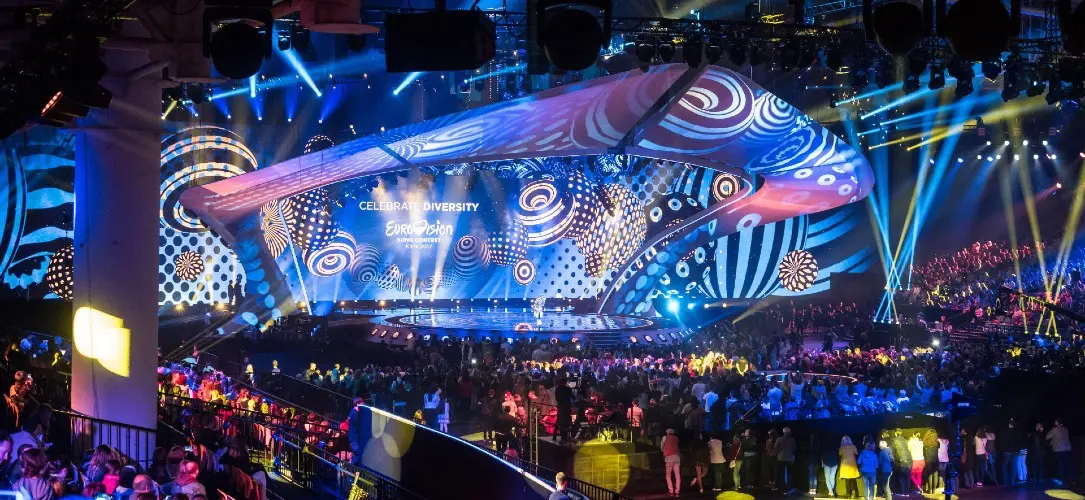
Learn everything you need to know about Eurovision 2026 in Vienna, including dates, line-up, voting rules, and the latest favourites for this year’s competition!
Eurovision 2026 is here, with the 70th edition of the contest taking place in Vienna, Austria.
After Austria’s win in 2025, the contest returns to one of Europe’s most iconic music cities, bringing together 35 countries for a week of semi-finals, live performances, voting drama and one very big Grand Final.
The First Semi-Final took place on Tuesday 12th May, with the first ten countries now confirmed for Saturday’s Grand Final. Finland, Greece, Israel and Sweden all made it through, meaning several of the leading names in the Betway outright market are still firmly in contention.
With one more Semi-Final still to come. the Eurovision picture is starting to take shape. In this complete guide to Eurovision 2026, we’ll cover everything you need to know, including when it takes place, where it is being held, which countries are competing, how the voting works, who is representing the UK, and which acts are currently among the favourites to win.
In this guide
When is Eurovision 2026?
Where is Eurovision 2026 being held?
Who is hosting Eurovision 2026?
Which countries are competing in Eurovision 2026?
Which countries qualified from the First Semi-Final?
What is the Eurovision 2026 format?
How does Eurovision voting work?
Who is representing the UK at Eurovision 2026?
Who are the favourites to win Eurovision 2026?
Who is commentating on Eurovision 2026 in the UK?
Who are the dark horses for Eurovision 2026?
What makes a winning Eurovision entry?
How can you watch Eurovision 2026 in the UK?
Eurovision 2026 FAQs
When is Eurovision 2026?
The Eurovision Song Contest 2026 takes place across three live shows in May.
The First Semi-Final was held on Tuesday 12 May 2026, followed by the Second Semi-Final on Thursday 14 May 2026. The Grand Final will then take place on Saturday 16 May 2026.
Each show begins at 21:00 CEST, which is 8pm in the UK.
Eurovision 2026 key dates
Event | Date | UK time |
First Semi-Final | Tuesday 12 May 2026 | 8pm |
Second Semi-Final | Thursday 14 May 2026 | 8pm |
Grand Final | Saturday 16 May 2026 | 8pm |
Where is Eurovision 2026 being held?
Eurovision 2026 is being held in Vienna, Austria, at the Wiener Stadthalle. Austria is hosting the contest after winning Eurovision 2025, with national broadcaster ORF responsible for organising the 2026 event. Vienna has hosted Eurovision twice before, in 1967 and 2015, making this the city’s third time welcoming the contest.
As well as the main live shows, Vienna is hosting a wider Eurovision programme throughout the week, with fan events, official meeting points and Eurovision-themed activities taking place across the city.
Who is hosting Eurovision 2026?
The Eurovision 2026 live shows are hosted by Victoria Swarovski and Michael Ostrowski, with the contest taking place at the Wiener Stadthalle in Vienna.
The Green Room is always one of the most entertaining parts of Eurovision night, giving viewers a live look at the artists as they react to the performances, points and results.
For Vienna 2026, the Green Room has been inspired by the city’s famous coffee house culture, adding a local Austrian feel to one of the contest’s most recognisable spaces.
Which countries are competing in Eurovision 2026?
A total of 35 countries are competing in Eurovision 2026. The contest is split across two semi-finals and the Grand Final, with ten countries qualifying from each semi-final. They then join the automatic finalists in Saturday night’s final.
The automatic finalists are host country Austria, plus France, Germany, Italy and the United Kingdom.
Eurovision 2026 automatic finalists
Country | Artist | Song |
Austria | COSMÓ | Tanzschein |
France | Monroe | Regarde! |
Germany | Sarah Engels | Fire |
Italy | Sal Da Vinci | Per Sempre Sì |
United Kingdom | Look Mum No Computer | Eins, Zwei, Drei |
Which countries qualified from the First Semi-Final?
The First Semi-Final took place on Tuesday 12th May at the Wiener Stadthalle, with 15 countries competing for ten places in the Grand Final. The ten qualifiers were Greece, Finland, Belgium, Sweden, Moldova, Israel, Serbia, Croatia, Lithuania and Poland.
Eurovision 2026 First Semi-Final qualifiers
Country | Artist | Song |
Greece | Akylas | Ferto |
Finland | Linda Lampenius x Pete Parkkonen | Liekinheitin |
Belgium | ESSYLA | Dancing on the Ice |
Sweden | FELICIA | My System |
Moldova | Satoshi | Viva, Moldova! |
Israel | Noam Bettan | Michelle |
Serbia | LAVINA | Kraj Mene |
Croatia | LELEK | Andromeda |
Lithuania | Lion Ceccah | Sólo Quiero Más |
Poland | ALICJA | Pray |
The five countries that did not qualify from the First Semi-Final were Portugal, Georgia, Montenegro, Estonia and San Marino.
That means some big talking points have already emerged. Finland, the current Betway favourite, made it safely through, while Greece, Israel and Sweden also kept their Eurovision hopes alive. With all four among the shorter-priced acts in the outright market, Saturday’s final is already shaping up to be highly competitive.
Which countries are in the Second Semi-Final?
The Second Semi-Final takes place on Thursday 14 May 2026, with another 15 countries competing for the final ten qualification spots.
Eurovision 2026 Second Semi-Final countries
Running order | Country | Artist | Song |
1 | Bulgaria | DARA | Bangaranga |
2 | Azerbaijan | JIVA | Just Go |
3 | Romania | Alexandra Căpitănescu | Choke Me |
4 | Luxembourg | Eva Marija | Mother Nature |
5 | Czechia | Daniel Zizka | CROSSROADS |
6 | Armenia | SIMÓN | Paloma Rumba |
7 | Switzerland | Veronica Fusaro | Alice |
8 | Cyprus | Antigoni | JALLA |
9 | Latvia | Atvara | Ēnā |
10 | Denmark | Søren Torpegaard Lund | Før Vi Går Hjem |
11 | Australia | Delta Goodrem | Eclipse |
12 | Ukraine | LELÉKA | Ridnym |
13 | Albania | Alis | Nân |
14 | Malta | AIDAN | Bella |
15 | Norway | JONAS LOVV | YA YA YA |
The UK, France and host country Austria will also vote in the Second Semi-Final, although they do not need to qualify as they already have a place in the Grand Final.
What is the Eurovision 2026 format?
Eurovision 2026 follows the traditional format of two semi-finals and one Grand Final.
The 30 semi-finalists are split across the First and Second Semi-Finals. From each semi-final, ten countries qualify for the Grand Final.
They will join the five automatic finalists, creating a final line-up of 25 countries competing for the Eurovision 2026 trophy.
Eurovision 2026 format explained
Stage | Number of acts | What happens |
First Semi-Final | 15 | ten countries qualify |
Second Semi-Final | 15 | ten countries qualify |
Grand Final | 25 | Winner is decided |
How does Eurovision voting work?
Eurovision voting is split between public votes and professional juries.
For Eurovision 2026, both the public vote and jury vote determine the top ten countries from each semi-final. This means each country’s result is shaped by both viewers at home and music industry professionals.
In the Grand Final, countries award points to their favourite songs, with the classic Eurovision scoring system building suspense as the jury and public votes are revealed.
How are Eurovision points awarded?
Ranking | Points awarded |
1st | 12 points |
2nd | 10 points |
3rd | 8 points |
4th | 7 points |
5th | 6 points |
6th | 5 points |
7th | 4 points |
8th | 3 points |
9th | 2 points |
10th | 1 point |
The scoring format is part of what makes Eurovision so unpredictable. A song can perform strongly with juries but struggle with the public vote, while another entry can become a televote favourite and climb the leader board late in the night.
Who is representing the UK at Eurovision 2026?
The United Kingdom is being represented at Eurovision 2026 by Look Mum No Computer with the song Eins, Zwei, Drei.
As one of the automatic finalists, the UK does not need to compete in the semi-finals to qualify for the Grand Final. However, UK viewers will still get a chance to see the entry performed during Eurovision week before the final result is decided on Saturday night.
Look Mum No Computer is known for experimental electronic music, handmade synths and unusual musical machines, which gives the UK entry a distinctive identity in the 2026 line-up. In a year where staging and memorability could make a major difference, the UK will be hoping to stand out from the crowd.
Who are the favourites to win Eurovision 2026?
The Eurovision favourites can change quickly, particularly once rehearsals begin and viewers get a first look at the live performances.
Following the First Semi-Final, Finland remains the act to beat. At Betway, we have Finland as the favourite to win Eurovision 2026 at 11/10, followed by Greece at 9/2 and Denmark at 11/2.
Eurovision 2026 winner odds
Below is a table including the Eurovision odds for some of the top nations competing:
Country | Artist | Song | Betway odds | Why they could win |
Finland | Linda Lampenius x Pete Parkkonen | Liekinheitin | 11/10 | The current market favourite and safely through to the Grand Final after the First Semi-Final |
Greece | Akylas | Ferto | 9/2 | A high-impact qualifier with strong televote potential and momentum heading into Saturday |
Denmark | Søren Torpegaard Lund | Før Vi Går Hjem | 11/2 | One of the strongest-priced Second Semi-Final contenders, with the potential to build momentum if it qualifies |
Israel | Noam Bettan | Michelle | 9/1 | Another First Semi-Final qualifier and one of the closer challengers in the betting |
France | Monroe | Regarde! | 10/1 | An automatic finalist with potential jury appeal and a song that could connect strongly on the night |
Australia | Delta Goodrem | Eclipse | 12/1 | A well-known performer who could stand out if the live vocal and staging land well in the Second Semi-Final |
While pre-contest favourites often dominate the conversation, Eurovision history has shown that momentum can change quickly. A standout semi-final performance, a clever staging reveal, or a strong public reaction can all shift the betting market before the Grand Final.
Finland’s qualification keeps them in the strongest position, but Greece and Israel both surviving the First Semi-Final means the top of the market remains competitive. Sweden may also be one to watch at a longer price, especially given the country’s history of strong Eurovision results.
Who is commentating on Eurovision 2026 in the UK?
For UK viewers, Eurovision 2026 will once again be led by familiar BBC voices across TV, radio and digital coverage.
Graham Norton returns to commentate on the Grand Final for BBC viewers, while Rylan Clark and Angela Scanlon are commentating on the semi-finals. On radio, Sara Cox is covering the semi-finals on BBC Radio 2 and BBC Sounds, with Rylan joining her for the final. Tia Kofi is also part of the BBC’s Eurovision coverage, leading backstage and digital segments.
Who are the dark horses for Eurovision 2026?
Every year, Eurovision produces a few surprise contenders. These are the countries that may not sit right at the top of the betting market but still have the ingredients to climb the leaderboard after rehearsals, semi-final performances or a strong public reaction.
With the First Semi-Final now complete, several potential dark horses have already made it through to Saturday’s Grand Final, while a few shorter-priced Second Semi-Final acts could still shake up the market.
Denmark
Denmark is currently priced at 11/2, making it one of the strongest contenders behind Finland and Greece. Søren Torpegaard Lund’s Før Vi Går Hjem is still to perform in the Second Semi-Final, but the odds suggest it is already being treated as a serious threat.
If Denmark qualifies and delivers a strong live performance, it could head into Saturday with real momentum.
Australia
Australia is priced at 12/1, putting Delta Goodrem’s Eclipse firmly in dark horse territory. With an established performer and a song that could benefit from strong vocals and polished staging, Australia has the potential to move closer to the favourites if it lands well in the Second Semi-Final.
Romania
Romania is currently priced at 22/1, making Alexandra Căpitănescu’s Choke Me one of the more interesting outsiders. It will need to make an impact in the Second Semi-Final, but if the performance feels bold and memorable, it could climb before the Grand Final.
Italy
Italy is priced at 28/1, which feels notable given the country’s strong Eurovision record. Sal Da Vinci’s Per Sempre Sì is already guaranteed a place in the Grand Final, and Italy has often performed well with juries when it brings a polished, credible entry.
Sweden
Sweden is currently priced at 40/1, making it a longer-priced contender than usual for a Eurovision powerhouse. FELICIA’s My System has already cleared the first hurdle by qualifying from the First Semi-Final, and Sweden’s track record means it is difficult to rule them out completely.
Sweden knows how to build a Eurovision package, and if the song gets a favourable Grand Final running order, it could climb.
Ukraine
Ukraine is also priced at 40/1, putting LELÉKA’s Ridnym among the more intriguing outsiders. Ukraine has a strong recent Eurovision record and often brings emotional performances that connect with both the arena and viewers at home.
If it qualifies from the Second Semi-Final, it could be one to watch heading into Saturday.
Moldova
Moldova has a long history of bringing energy, personality and memorable staging to Eurovision. Satoshi’s Viva, Moldova! is now through to the Grand Final, and at 40/1, it could appeal to viewers looking for a lively outsider.
In a final where several favourites are likely to split the top-end vote, a performance with personality could still make noise on the scoreboard.
What makes a winning Eurovision entry?
Eurovision winners rarely succeed because of one factor alone. A winning entry usually combines a memorable song, strong live vocals, distinctive staging and the ability to connect with both juries and viewers at home.
To better understand what it takes to win Eurovision in 2026, we spoke to Tim, Co-Editor-in-Chief of That Eurovision Site, for his expert insight on this year’s contest. From voting trends to standout performances, his analysis helps break down what really matters when it comes to lifting the trophy.
Song and memorability
There is no fixed formula for a winning Eurovision song. As Tim explains, “the winners have been unique in their own right, especially for the past two years,” suggesting originality remains a major advantage in 2026.
Rather than following trends, successful entries tend to stand out instantly. For casual viewers trying to spot a potential winner, Tim highlights one key indicator: a song that can be delivered vocally at a high level even with complex staging. Maintaining a balance between ambition and execution is often what separates contenders from champions.
Staging and performance
In modern Eurovision, staging and song quality go hand in hand. “The performance wouldn’t be there without the song, and you need the performance to be able to get the attention and show the viewers their story,” Tim notes.
A strong concept can elevate a track, but without a solid song underneath, it rarely succeeds. Likewise, even the best songs need compelling visuals to stand out in a packed field. With audiences watching both in the arena and at home, the ability to tell a story on stage has become just as important as the music itself.
There are clear examples where staging has elevated an entry. At the Eurovision Song Contest 2019, Australia refined its performance significantly, helping secure a top-ten result. Similarly, Eurovision Song Contest 2014 saw Ukraine upgrade its staging from the national selection to the final, turning a borderline qualifier into a strong finisher.
These examples show that while staging can push a song higher up the leader board, it struggles to compensate for a weak track on its own.
Jury appeal vs public appeal
Eurovision’s voting system splits influence between juries and the public, but the balance may not be entirely even. According to Tim, “the jury has more sway,” with winners typically performing strongly with professional panels.
That doesn’t mean televote appeal isn’t important – far from it. The most successful entries are those that can bridge the gap, appealing to industry experts while still connecting emotionally with viewers. In a competitive year like 2026, that dual appeal could prove decisive.
Momentum during Eurovision week
While momentum is often talked about from rehearsal buzz to semi-final reactions, its actual impact can be overstated. Tim suggests that factors like running order and semi-final performance “do not matter so much,” and points out that recent winners have succeeded regardless of their position in the show.
Instead, the focus remains firmly on the Grand Final performance. “Everyone performs, and the main thing would be for the Saturday evening,” he explains. A standout moment on the night itself is still the most reliable path to victory.
That said, momentum can still shape the narrative. As seen in previous years, pre-contest favourites don’t always win, with it being “hit and miss,” according to Tim. This leaves plenty of room for surprises. Countries like Croatia and Australia have already been identified as potential dark horses, while Finland and Moldova are also worth watching for their distinct styles – from emotional storytelling to high-energy performances.
A good example is the Eurovision Song Contest 2016, where Ukraine combined jury and public support to secure victory. Even then, the foundation remained the same: a strong, well-executed song.
While betting favourites often lead the conversation, Eurovision history shows results can shift quickly. This year, countries like Croatia and Australia could outperform expectations, while Finland and Moldova stand out for their distinct styles and strong audience appeal.
How can you watch Eurovision 2026 in the UK?
UK viewers can watch Eurovision 2026 live via BBC and on official Eurovision channels, with the shows starting at 8pm UK time. The Second Semi-Final takes place on Thursday 14 May, followed by the Grand Final on Saturday 16 May.
Eurovision 2026 UK viewing times
Show | Date | UK time |
First Semi-Final | Tuesday 12 May 2026 | 8pm |
Second Semi-Final | Thursday 14 May 2026 | 8pm |
Grand Final | Saturday 16 May 2026 | 8pm |
How to bet on Eurovision 2026
Now that you’re a bit more informed, you may want to place a bet on Eurovision 2026 ahead of the final. If you do, head over to the Betway Insider blog for expert insights, including features on Eurovision’s greatest hits and what it’s like behind the scenes at Eurovision.
Eurovision 2026 FAQs
When is Eurovision 2026?
Eurovision 2026 takes place from Tuesday 12 May to Saturday 16 May 2026.
When is the Eurovision 2026 final?
The Eurovision 2026 Grand Final takes place on Saturday 16 May 2026.
What time does Eurovision 2026 start in the UK?
The Eurovision 2026 live shows start at 8pm UK time.
Where is Eurovision 2026 being held?
Eurovision 2026 is being held in Vienna, Austria.
What venue is Eurovision 2026 taking place at?
The contest is taking place at the Wiener Stadthalle.
How many countries are competing in Eurovision 2026?
A total of 35 countries are competing at Eurovision 2026.
Is the UK in the Eurovision 2026 final?
Yes. The UK is one of the automatic finalists, and so does not need to qualify through the semi-finals.
Who is representing the UK at Eurovision 2026?
The UK is represented by Look Mum No Computer with the song Eins, Zwei, Drei.
Which countries qualified from the First Semi-Final?
Greece, Finland, Belgium, Sweden, Moldova, Israel, Serbia, Croatia, Lithuania and Poland qualified from the First Semi-Final.
Which countries did not qualify from the First Semi-Final?
Portugal, Georgia, Montenegro, Estonia and San Marino did not qualify from the First Semi-Final.
How many countries qualify from each semi-final?
Ten countries qualify from each semi-final.
Who are the favourites to win Eurovision 2026?
Finland are currently the Betway favourite to win Eurovision 2026 at 11/10, followed by Greece at 9/2 and Denmark at 11/2. Odds are subject to change.
Disclaimer:
Betting odds reflect market sentiment, not certainty. Eurovision history has repeatedly demonstrated how quickly momentum can shift following rehearsals, jury shows and live broadcasts.