Nineteen games in is the perfect time to assess the English top flight's good and bad and discuss which clubs are fulfilling their potential
1. Arsenal
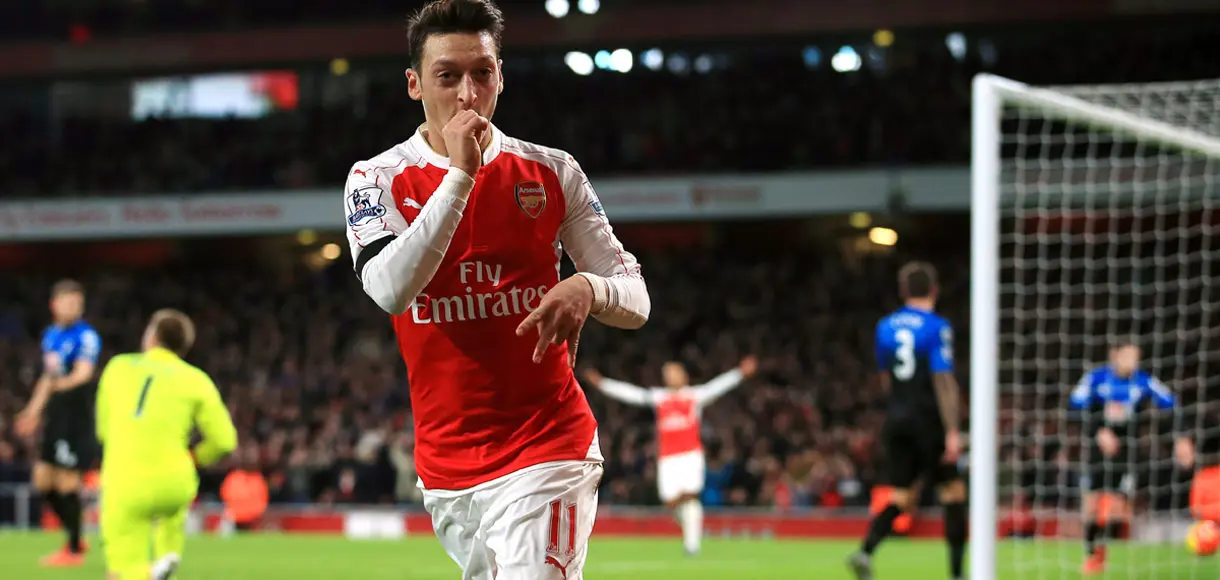
Good: The most influential players are those who improve the performances of their team-mates and this is where Mesut Ozil has excelled this year.
The German playmaker has 16 assists – more than anyone in Europe’s top-five leagues – and is relishing the added responsibility as Alexis Sanchez struggles for form and fitness.
Bad: Arsene Wenger’s decision to not buy another central midfielder looked dubious in the summer, but even more so now first-choice pairing Francis Coquelin and Santi Cazorla have been ruled out with long-term injuries.
Fulfilling potential? As it stands. For the first time since 2007/08, Arsenal are genuine Premier League contenders. But in such an unpredictable and open season, it will be an opportunity missed if their wait for a league title extends to a 12th season.
2. Leicester
Good: An obvious one, this, but the form of Jamie Vardy and Riyad Mahrez – the division’s joint-first and fourth highest scorers respectively – propelled the Foxes to the top of the table and, it seems, genuine title contention.
Bad: While it is churlish to criticise a team that was bottom 12 months ago, Leicester do have the worst defensive record of any side in the top half.
That will need to improve if they are to maintain their challenge, especially if Vardy and Mahrez suffer – as is probable – lean patches.
Fulfilling potential? Yes, and then some. Top 10 would have been a fine season for Claudio Ranieri’s side. Now, though, it has the potential to be one of the greatest in Premier League history. 3. Manchester City
Good: How quickly Raheem Sterling and Kevin De Bruyne have settled, especially with Manuel Pellegrini’s side missing David Silva and/or Sergio Aguero for much of the season. The £100m outlay on that duo was money well spent.
Bad: The shambles that is City’s defence when Vincent Kompany is not fit. They have kept seven clean sheets the eight times he has started, but only one in the 10 he has missed.
That is unpleasant for a club that has spent £60m on centre-backs in the last 18 months.
Fulfilling potential? Not really. No team has a better combination of world-class players and title-winning experience. They should win what would be their third title in five seasons at a canter.
4. Tottenham
Good: Mauricio Pochettino has cultivated what all the best managers strive for: an identity. His players are playing for him and it shows – they are fitter and press better than any side in the division.
Bad: A combination of being profligate and/or naïve has cost Spurs crucial points from winning positions, most notably at Arsenal. Inconsistency is to be expected from young players, of course, but no side has drawn more matches.
Fulfilling potential? Certainly. Pochettino believes his Spurs side can be even better, but claiming a Champions League place – a position they currently occupy – would represent fine progress for the Argentine.
For the team that boasts the league’s best goal difference, a title charge should not be discounted, either. 5. Crystal Palace
Good: There has been no better central midfielder than Yohan Cabaye this season, while the pace and power of Yannick Bolasie and Wilfried Zaha on the counter-attack gives the Eagles opportunities in every match.
Scott Dann, meanwhile, is one of the division’s most understated and reliable defenders.
Bad: The Eagles’ strikers – Conor Wickham, Dwight Gayle, Marouane Chamakh and on-loan Patrick Bamford – have scored one league goal between them. Not good enough.
Fulfilling potential? Definitely. Alan Pardew for England manager? Perhaps not, but in 12 months he has crafted a steadfast and exciting outfit that is poised to achieve the club’s best ever Premier League finish.
6. Manchester United
Good: Chris Smalling has become the Premier League’s best centre-back. Beyond that? Not a lot.
Bad: Impotent in attack and bipolar in defence, United’s decline under Louis van Gaal has been emphatic. They have won just four of their 12 Premier League games since topping the table at the end of September.
Fulfilling potential? No way. The football played under Sir Alex Ferguson has been romanticised, but United supporters deserve better.
The enthusiastic response to the 0-0 draw against Chelsea at Old Trafford shows how troubled the club under the vulnerable Dutchman has become.
7. Liverpool
Good: The appointment of Jurgen Klopp – one of the game’s best managers who, despite an unspectacular start and overzealous celebration after drawing at home to West Brom, will improve the Reds once he makes the squad is own. The 4-1 win at Manchester City demonstrated that.
Bad: Up front. Daniel Sturridge is probably the best striker in the country after Sergio Aguero. But he cannot stay fit. Christian Benteke, meanwhile, is not ideal for Klopp’s high-pressing, fluid formation.
Fulfilling potential? Getting there. The Champions League places should be their aim, especially considering the struggles of Chelsea and Manchester United.
8. West Ham
Good: The five goals and three assists recorded by Dimitri Payet before November. The gifted playmaker settled into the Premier League as well as any foreign import ever has and was an early Player of the Year contender.
Bad: The ankle injury suffered to Payet after a nasty tackle by Everton’s James McCarthy in November. The Hammers have not looked – or been – the same since.
Potential being fulfilled? Pretty much. A top-eight finish would have been gratefully received at the start of the season, but the buoyancy that followed the wins at Arsenal, Liverpool and Manchester City dissipated during their recent eight-game winless run.
The challenge now that has ended is to go again.
9. Watford
Good: Eight clean sheets and the most prolific striker in England this year in Odion Ighalo – Watford have humbled those who predicted their mish-mash transfer policy would result in a swift return to the Championship.
Bad: Good luck finding any reason to criticise the Hornets’ season so far. Four wins in their last six matches is title-challenging form.
Fulfilling potential? An emphatic yes. But retaining the services of Ighalo, who has scored 14 Premier League goals, in January is essential if that is to continue. 10. Stoke
Good: Much has been made of their new-found attacking prowess, but equally impressive is how Mark Hughes has achieved that without significantly sacrificing his side’s defensive solidarity.
Marko Arnautovic, Xherdan Shaqiri and Bojan are good enough to play for any side in the division, while no goalkeeper has kept more clean sheets than Jack Butland.
Bad: The impact of positive results against Tottenham, Chelsea, Manchester City and Manchester United has been diluted by home losses to Crystal Palace, Watford and West Brom.
Fulfilling potential? Yes. Hughes’ side understandably took time to settle following the arrival of players who fundamentally changed their style of play.
The Potters have won eight of their last 13 matches, though, and should achieve their best ever Premier League finish for the second successive season.
READ: Blowing the whistle on 2015: Our half-time report on the Premier League’s bottom clubs