



While Murray, Djokovic and Nadal are driven by their quest for greatness, the Games represent a dilemma for those players on the outskirts of the Big Four
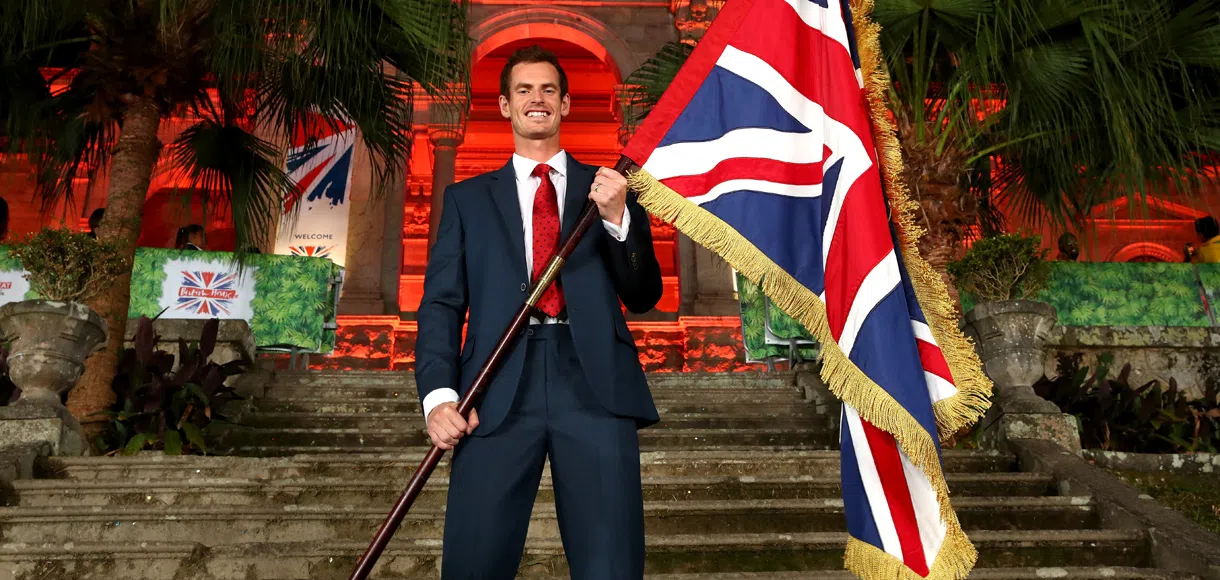
“I’ve never felt that proud before,” was Andy Murray’s reply when asked to describe the moment he was told he would be Great Britain’s flag bearer at the Rio 2016 opening ceremony.
Murray was chosen because he is Britain’s greatest living sportsman.
The honour would have been bestowed upon one of the several other worthy contenders, however, had the Scot been ambivalent about tennis’ participation in the Olympics during his career.
But Murray embraced it, winning a silver doubles medal and, most famously, gold in the singles – a triumph which preceded his three grand slam titles – at London 2012.
The 29-year-old’s attitude towards the five-ringed event is not unique among the game’s best players, either.
“The proudest moment, for me, when they do the on-court announcements, are the Olympic results,” is the opinion of 21-time slam winner Venus Williams, who has won gold medals in three of the last four Games.
A gold medal, meanwhile, is the only worthwhile thing in the sport that Novak Djokovic has not won.
“It would be ranked as one of the highest if not the highest achievement that I would have in my career,” Djokovic told reporters this week when describing what it would mean to him if he finally does so in Brazil.
A fifth grand slam? Almost.
Which is why the absence of awarding ranking points for those taking part is curious.
The prestige of the event means that the likes of Murray and Djokovic – and Rafael Nadal, who will compete despite his injured wrist not being completely healed – will turn up regardless.
They are financially secure and driven by their quest for greatness.
But for players on the outskirts of the Big Four, taking part in a tournament that offers no points or prize money represents a dilemma.
Take Dominic Thiem, who is currently the youngest player inside the top 10 after a breakthrough season on the tour which included reaching the semi-finals of the French Open.
Eager to continue his ascent, Thiem chose to compete at this week’s ATP Los Cabos – where the winner will pocket just 250 points – and focus on other North American hard-court events rather than compete in Rio.
The 22-year-old is one of five of the top 10 who will miss the tournament for one reason or another – which is four fewer than four years ago, when Nadal was ruled out through injury.
Roger Federer would have been there were it not for his injured knee, while Stan Wawrinka was a late withdrawal after aggravating an existing back problem at last week’s Rogers Cup.
And then there are Tomas Berdych and Milos Raonic, who have pulled out because of the Zika virus.
Their reasons are sincere, presumably, but not going to South America would have been more of a quandary had there been an appropriate amount of ranking points on offer.
Even more curious is that the London Games – which was logistically an easier tournament to take part in given that it took place at the All England Club a few weeks after Wimbledon – did offer ranking points.
Not enough, mind you.
Murray, for example, earned 750 for winning gold, which is slightly more than what a slam semi-finalist would receive.
“The reason I want to play there is to try and win medals,” was Murray’s view when asked about the change, which also applied to the Davis Cup.
Murray is not wrong, of course. But it also feels like the point is being missed somewhat.
No player competes at Wimbledon, say, primarily to accrue ranking points. Yet they are dished out as generously as prize money.
So rather than be removed altogether, the number of points should have been increased so that they were comparable with the majors or, at the very least, the Masters 1000s.
When confirming the change last November, ITF president David Haggerty explained that the amount of countries in his organisation has increased by more than 40 per cent since tennis returned to the Games in 1988.
Tennis and the Olympics, then, are clearly good for each other, so the decision to undermine the relationship in this way – for reasons that remain unclear – is short-sighted.
Not that this is about growing the game, especially.
It is about what is fair.