



New Zealand's recent success is not just unprecedented in rugby union, but arguably in all of sport - here is the elite that they have now joined
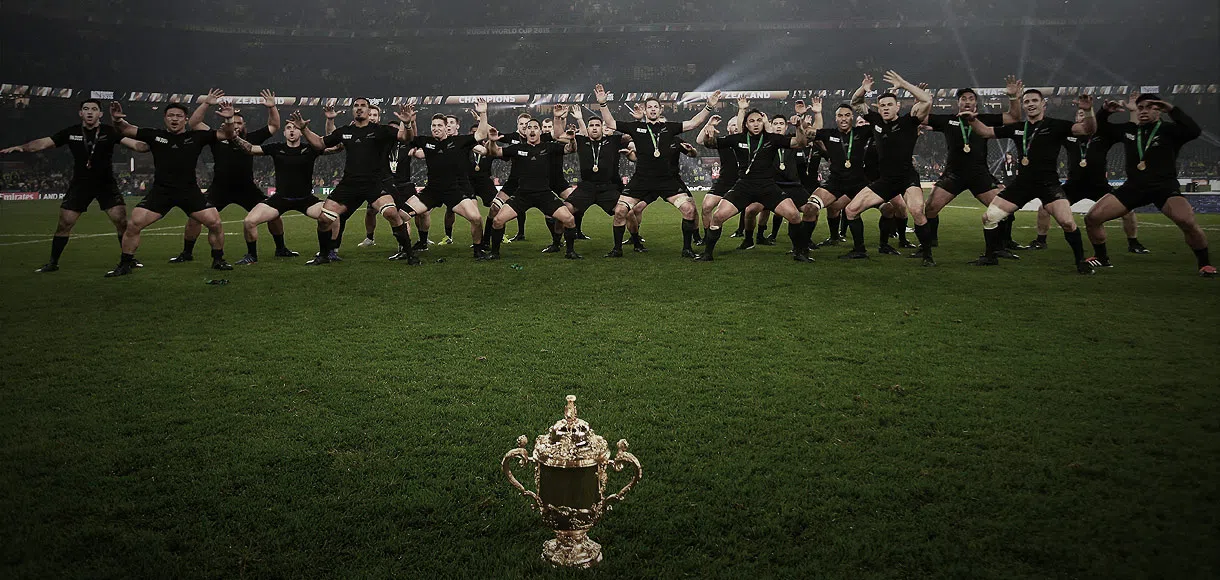
In becoming the first team to ever retain the Rugby World Cup – losing just three games in the four years in between – the current New Zealand side have already confirmed themselves as the greatest rugby team to ever take to the field.
But how do their achievements compare with the most iconic teams in sport?
We examined the Kiwis’ record against other worthy contenders in an attempt to determine the greatest international sporting team of all time.
USA men’s basketball team 1992 – 2000
When it comes to teams who have completely outclassed all before them, few can compare to the glittering period enjoyed by the USA men’s basketball team of the 1990s.
Their dominance began in 1992, when the decision of the FIBA – international basketball’s governing body – allowed players from the NBA to compete in the Olympics for the very first time.
Consequently, the team that travelled to Barcelona 1992 was one of the most illustrious array of talents ever assembled – with 10 of the squad of 12 being named in the NBA Top 50 four years later.
Featuring icons such as Michael Jordan and Magic Johnson, ‘The Dream Team’ stormed to Olympic gold on their way to being hailed as the greatest team to ever play the game.  The core of that team in Charles Barkley, John Stockton, Scottie Pippen, David Robinson and Karl Malone then went on to retain their medal on home soil at Atlanta 1996 and confirm their place in the pantheon of the greats.
However, although the USA continued to reign on the world stage during the rest of the decade, various disputes with the national league meant that their success was achieved by numerous different groups of players.
The team that won the World Championship in 1994 was made up of an entirely new roster featuring exclusively younger players, while the side that won bronze in 1998 featured no NBA players at all thanks to a dispute regarding a proposed salary cap.
Although a third consecutive Olympic gold was secured by another new-look side at Sydney 2000, the underwhelming manner of their victory after several elite players declined to take part confirmed the end of their aura of invincibility – with USA stumbling to bronze four years later.
Australia Test cricket team 1999 – 2007
When Steve Waugh was appointed as Australia captain at the start of 1999, it marked the beginning of cricket’s finest ever dynasty, with the Baggy Green going on to dominate the sport in all formats for the next decade.
Between March 1999 and January 2007, Australia won 25 out of 31 Test series that they played – losing just three – with a win ratio of 73 per cent and a series success rate of an incredible 80 per cent.
During this time they defeated every other Test-playing nation both home and away at least once and even overcame an ICC World XI in 2005 in a one-off exhibition. The only team in cricketing history that has been able to come close was the West Indies side of the 1980s, who, despite not losing a series for 15 years, only had a win ratio of 58 per cent during their peak.
That side had enjoyed the most consecutive Test wins with 11, a record that Australia first broke in 2001 and then equalled in 2008 after twice enjoying runs of 16 victories in a row.
Even after being written off following their 2005 Ashes defeat – their first defeat for over four years – Australia recovered to underline their superiority by winning eight series in a row, breaking the record of seven that they shared with the West Indies.
Even more remarkably, the spine of the team in Matthew Hayden, Ricky Ponting, Adam Gilchrist, Brett Lee, Shane Warne and Glenn McGrath among others also formed the core of the ODI team that won an unprecedented three consecutive World Cups in 1999, 2003 and 2007.
It was quite simply the most dominant era ever enjoyed by a single side in the long history of Test cricket, with record-breaking players in every facet of the game who successfully managed to revolutionise the sport with their attacking instincts and ruthless approach.
Spain national football team 2007 – 2013
Despite boasting some of the most successful club sides in the world, prior to the turn of the century Spain had always been regarded as football’s greatest underachievers in an international context.
Even their victory as hosts of the 1964 European Championship – when they defeated the Soviet Union in the final – was undermined by the political connotations that came with Francisco Franco’s fascist dictatorship.
It was fitting, then, that a generation of players drawn together from all of the Spanish regions that Franco tried so hard to suppress should end their long wait for success on their way to becoming officially the most successful team in the history of international football.  With a core of players from Barcelona who won two Champions Leagues, three La Liga titles and two Spanish Cups during four years under Pep Guardiola, the Spanish national team were able to develop the Catalans’ ethos into their own exceptional style of football.
Based on maintaining possession through rapid movement and intricate passing, the Spanish approach – which came to be known as tiki taka – appeared almost impossible to counteract as La Roja swept aside all before them.
First came their victory under Luis Aragones in Euro 2008, where they won their group with a perfect record before negotiating the knock-out stages without conceding a goal.
A seamless transition to the stewardship of Vicente del Bosque then saw Spain go on to claim their first ever World Cup in South Africa in 2010, becoming the first European country to lift the trophy outside of Europe.
Yet perhaps their crowning achievement came with an emphatic 4-0 victory over Italy in the final of Euro 2012, a result that made them the first team to ever have retained the European Championship.
In doing so, Spain also became the only side in the history of international football to win three major tournaments in a row, displaying a consistency and longevity that took them to the top of the list of the all-time greats.
New Zealand rugby union team 2010 – present
When it comes to the domination of a single sport, there is simply no country that can compare to New Zealand’s record in rugby union.
In more than a century of playing, the Kiwis have won more than three quarters of their 538 matches to date.
In the two decades since the sport turned professional in the summer of 1995, meanwhile, they have been victorious in 83 per cent of their games.
Yet even those formidable stats become insignificant when set alongside the current record of the most recent generation of All Blacks during the past five years.
Since the beginning of the 2010 season, New Zealand have won an incredible 72 out of the 80 matches they have played, with a win ratio of 90 per cent. Even more remarkable is that 70 of those 80 matches have been against Tier 1 opposition, with the vast majority taking place against their Southern Hemisphere rivals in the annual Rugby Championship.
Having won that competition three times in a row in between their successive World Cup victories and lost just once against Northern Hemisphere opposition since 2007, there is no other side who can claim to have been so consistently excellent against top-class opposition.
Indeed, in 2013 New Zealand became the only team in the professional era to complete a perfect season after winning all 14 of their matches.
Perhaps the most impressive thing about their record, however, is not the number of victories but the manner of them.
During those 80 matches over the past five years, New Zealand have enjoyed an average winning margin of 19 points – the equivalent of more than three tries.
This current crop of All Blacks are not just better than everybody else – they are a long way ahead.
And if their performance in the most recent World Cup is anything to go by, this current dynasty is a long way from ending.
Even with the likes of Richie McCaw, Dan Carter and Ma’a Nonu retiring, the next generation in Sam Cane, Beauden Barrett and Nehe Milner-Skudder is already in place.
Having already spent well more than 2,000 days at the top of the World Rugby rankings, it does not appear that they will be moved any time soon.  READ: Rugby World Cup review: Who wins David Wallace’s tournament awards?
READ: Who takes gold, silver and bronze in our all-time Rugby World Cup final moments?
READ: Rugby World Cup review: Who wins Mike Tindall’s tournament awards?