


This glossary can help you understand the most common horse racing betting terms and lingo.
Horse racing betting terms explained
Looking to brush up on some of the most common horse racing terminology? Running through terms like Lucky 15, Patent, and Trixie, we’ve got you covered with the following horse racing lingo guide.
Use this glossary as your go-to reference for the most popular horse racing betting terms.
Accumulator
An accumulator bet is when you include two or more selections in the same bet in order to drive the odds up. For your bet to win, all of your selections would need to be winners.
Ante post
A bet placed on a horse well in advance of its race, potentially weeks or months before the racecourse’s betting market opens.
Banker
A horse that is the firm favourite to win, according to the betting markets. Bankers are often very short-priced, with low returns on their bets, as experts expect them to outclass the rest of the field.
Bumper
A National Hunt Flat race with no obstacles, designed to give newcomers racing experience before they transition to races with hurdles or fences.
Each-way
When you bet on a horse each-way, you place half of your stake on it to win and half of your stake on it to place. Details on what constitutes a place differ by race, but it is usually the top three or four positions.
Handicap
The next of our popular horse racing terms is handicap betting. A handicap race is one in which the horses carry weight so as to even up the contest. The better the horse, the heavier the weight.
Hurdle
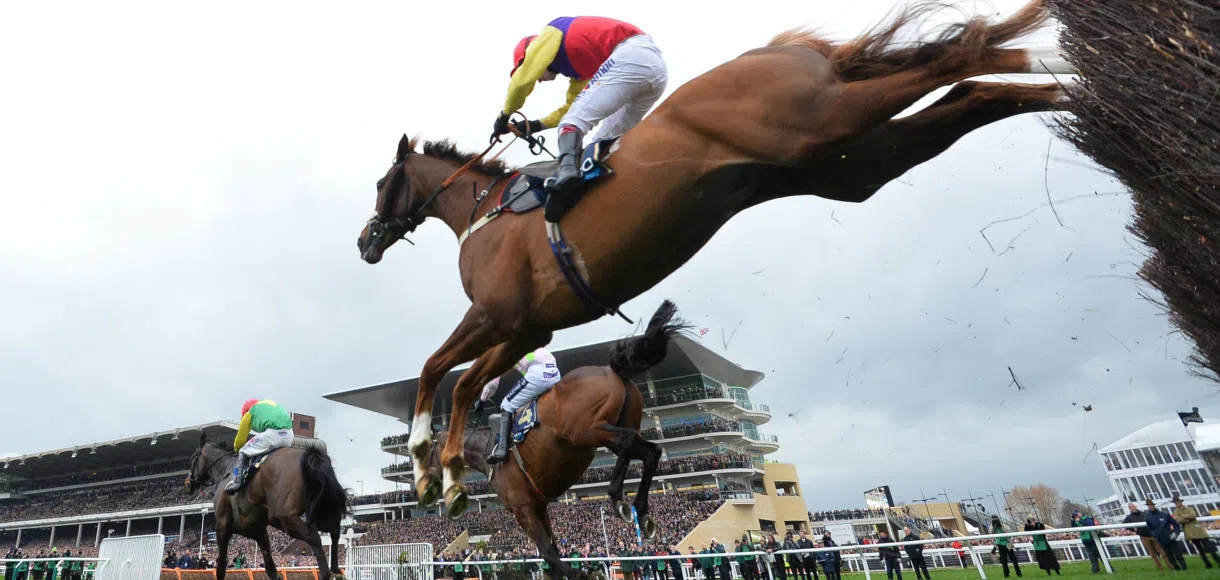
An obstacle featured in horse racing with a minimum height of three-and-a-half feet (1.07m). They are typically made of brushwood panels (though, a racecourse may opt for foam padded hurdles) and are designed to be less solid than the fences used in steeplechases.
Juvenile
A juvenile is a young horse that doesn’t have much racing experience. In National Hunt racing, juveniles are typically three or four years old at the start of the racing calendar year, but two-year-old horses are considered juveniles in flat racing.
Length
A measure of distance between racers in a horse racing event, equal to approximately 8 or 9 feet (2.4-2.7m). This distance is based on the typical nose-to-tail length of a horse, but it can vary depending on factors such as race type, racecourse, going, etc.
Lucky 15
A Lucky 15 bet includes four selections but is effectively 15 bets in one, covering all of the potential outcomes. Your stake is split into 15, to cover the four singles, six doubles, four trebles and the total four-fold.
NAP
NAP is a term that derives from the card game Napoleon to denote a tipster’s most confident selection of the day.
National Hunt
The official name for jump racing (hurdle and steeplechase events) in many European countries, including Britain, Ireland, and France. The National Hunt includes major events like the Cheltenham Festival and Aintree.
Non-runner
A horse that is scheduled to race in an event but is withdrawn before the race begins. Injuries and illnesses are the most common reasons for horses to be withdrawn from events, but a change in the going, travel issues, and training problems can also affect a horse’s status in a race.
Novice
A horse that is inexperienced in a particular type of race. In National Hunt racing, a novice is any horse that hasn’t won a specific kind of event before the start of the season.
OR (official rating)
A horse’s rating is decided by the British Horseracing Authority, based on its previous performances. Individual races are organised by rating, so horses with a similar rating race each other, while comparing the horses’ OR is used to determine how much weight each should carry.
Patent
A Patent bet includes three selections but is effectively seven bets in one, covering all of the potential outcomes. A seventh of your stake is placed on each of the three singles, the three available doubles and the treble.
Place
When you bet on a horse each-way, you place half of your stake on it to win and half of your stake on it to place. For a horse to place it commonly needs to finish in the top three or four positions, with the details for each race laid out on the sportsbook.
Photo finish
A scenario where two or more horses cross the finish line so close to one another that a photo must be taken to determine who came first.
Scratched
A horse is scratched when it has been entered into a race but then withdrawn, usually because of concerns about its fitness or health.
SP (starting price)
The final price for a runner before the race begins. If a horse’s last price before the race begins is 12/1, then 12/1 is its starting price.
Steeplechase
A type of race that features a variety of obstacles over a long distance, including fences, water jumps, and ditches. Steeplechases feature fences that are typically taller and studier than a standard hurdle race – demanding strong jumping ability.
Trixie
A Trixie bet includes three selections but is effectively four different bets in one. Your stake is split into four, covering the three doubles and the treble as a whole.
Weight
The total weight that a horse must carry in a race, including the jockey, its equipment, and any handicaps that have been placed on it.
Yankee
A Yankee bet includes four selections but is effectively 11 bets in one. Your stake is split into 11, covering the four doubles, six trebles and the total four-fold. Unlike a Lucky 15 bet, a Yankee bet does not cover the singles individually.
What is the going?
The going is a term used to describe the conditions of the ground on a racecourse. It’s an essential factor in a race, as it affects a horse’s speed, stability, and overall performance. Some racers will prefer firm surfaces, while others may race better on softer ground. Here’s the scale that the going is measured on:
Firm
Firm surfaces are hard and dry with very little moisture. The tough soil when the going is firm can be dangerous for both horses and jockeys, so racecourses are likely to water the ground in such conditions to reduce the risk of injury.
Good to firm
A relatively fair surface, ranking between Good and Firm on the scale. These conditions will have some moisture in the ground, but can still feel a little dry. Good to firm is often considered the best going for flat races.
Good
Good soil is the middle ground of the going scale, as it’s not too soft or hard, and not too dry or wet. It’s the condition that most racecourses will aim for, as it’s a well-balanced all-rounder that lends itself nicely to all races and the broadest range of horses.
Good to soft
Ground that is a bit more moist than good going, which can slow competitors down slightly. In Irish horse racing, good to soft soil is commonly called ‘Yielding’.
Soft
More common during the winter, this condition features moist ground that can often slow horses, as they have to dig deeper into the soil as they run.
Heavy
The wettest condition on the going scale. This is when the racecourse is extremely wet after heavy rainfall, which slows horses and requires greater stamina to complete a race.
How to bet on horse racing
Now that you’re clued up on the above horse racing betting terminology, let’s take a quick look at how to place a bet:
The process of placing a horse racing bet with Betway is simple. Just add your chosen horses to your bet slip (by clicking the current odds as they appear to the right of its name). Next, enter the amount you wish to stake on each selection!
Feeling clued up on horse racing jargon and looking for some extra insights? Just head over to the Betway blog. Then it’s time to visit our horse racing betting page to make your bet. Or, stay ahead of the game with the Betway Sports app! Download it now from the Play Store or the App Store to enjoy live betting, real-time updates, and exclusive offers right at your fingertips.