In our exclusive interview, F1 Performance Engineer Cristina Fernandez discusses data-driven decision-making, team collaboration and finding performance on race weekends.
How many engineers does it take to work on a car?
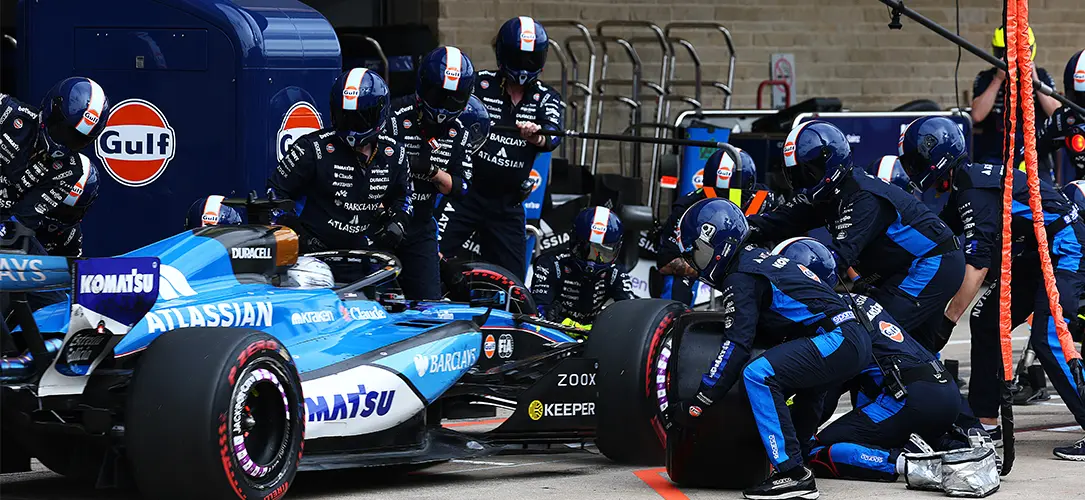
It’s a big group, actually. We have about 10 to 15 engineers track side, but then we’ve got an extension to that who work on what we call race control.
That is the race operations back in Grove, which can easily be about 30 or more engineers. Now that is split across the two cars, but it is quite easily 10 engineers focused specifically in session to one car.
Does a Performance Engineer work on both cars, or specifically only one?
The role of the performance engineer is one that doubles up effectively. So, I work specifically with Carlos [Sainz], but that obviously doesn’t mean that we don’t look at what Alex [Albon] is doing because in the end we operate as one team, so we’ve got two cars that we essentially have to optimise to the best of our ability.
But I think where the role of the performance engineer becomes a bit more specific is when we’re trying to understand how to adapt areas of the car that can be changed, so we can best adapt it to every driver, as they are going to drive somewhat differently.
So, although from the outside both cars will look fundamentally the same, the last bit of refinement is different based on what each driver is going to need.
Could an F1 Performance Engineer transition to Formula E, or does it require a completely different skill set?
I think fundamentally I always put the role of performance engineer as all things data. For example, my background was more than 10 years of Formula E before I came to Formula 1, so I never dealt with things like fuel, for obvious reasons. But the specificities of the tasks are going to change as there are things specific to this formula.
Fundamentally the base tasks remain the same, which is using data to understand what we call the performance envelope of the car. This is ultimately about seeing how you can find ways of improving the car every time we go out on track and session to session.
So I’d probably say up to 70 or 80 percent of the role itself is actually quite similar series to series, but then there’s always the 20 or 30 percent where it becomes very specific to the car and the series that you’re working on.
What’s the main part of the car F1 teams need to nail to win races?
I would say the biggest thing is the human part. I say that is still the biggest performance differentiator. These are very big teams where you need to work together and have everybody pulling in the same direction to make those decisions in such a pressured time frame. Ultimately that is what makes a difference.
In terms of the car itself, everything plays a part – which is also one of the beauties of it. You could be an aerodynamicist, a tyre engineer, or a mechanical designer. There are many different roles across the board and every single bit of it is playing a part in making a winning car.
But above that all is how the team and the people are working together before you get to the race.
As car behaviour & performance have become increasingly software-driven, how has the type of real-time performance feedback provided to drivers evolved, and how does it influence decision-making during a session?
I arrived at Williams last year, so it was the last year of the previous generation. Obviously, there’s been a big regulation change this season and coming after this year as well. So I think it’s clear for everybody that everything around how the power unit works on these cars and the introduction of the electrical component has made a big difference.
It’s been quite clear and spoken about. That’s introduced a level of complexity, and it has become more difficult for the drivers as it is an additional workload for them to manage in session. That’s also across any lap, from the moment they leave the garage, whether they are on a warm-up or preparation lap, to a qualifying lap or during the race. There is an extra demand on the drivers simply because of the nature of these cars.
We’re trying to do as much as possible on our side by giving ourselves live metrics to help them. This helps with trying to understand these new parts of the car, so we can give them as much feedback as possible that helps manage the extra workload that they’ve got on them this year.
But there’s definitely been a level of us incorporating new metrics and essentially new parameters in session that have now become more relevant.
When new regulations or technologies are introduced, how does that change your approach to performance analysis and car setup, particularly at circuits where you have years of historical data to draw on?
It’s been a bit of a reset. For example, at Singapore we still have to look at what we did in the race last year. But it has been a different year in that you don’t go as much by what you’ve necessarily done in the past – instead you take it as a reference.
In this generation, it is a lot more about learning from track to track than it is about looking at what you did a year ago on in a completely different car. To an extent, that has definitely put the team out of their comfort zone because there’s a bit more exploration suddenly happening on a car that’s new and that fundamentally has a different working operation window when compared to last year.
So there’s a lot less copying from last year of what worked and what didn’t. But the fundamentals still apply because you take the sensitivities of the track and know what the limitations of a track are going to be like compared to others.
But we’ve definitely had to step out of a comfort zone this year to try and understand what the new car is like.
In a race weekend’s high-pressure environment, what is your process for distinguishing between actionable data and background noise?
A lot of that comes down to previewing and work. The way we see it is you really don’t want to be just making things up on the fly. Ideally, everything that happens live is something that you’ve already seen before.
We prepare for plans A to Z . You want to put yourself in a position where it’s just defaulting from plan to plan, rather than just trying to understand what’s happening as you go.
The more pre-event work that we do, the less noise there is effectively because you’re not really facing anything that you’ve not thought through before. That way you can pick and choose what part of the plan to move on to. I think that’s the best way to minimise the amount of noise in a session, and the best way to keep calm and think with clarity.
What is the most difficult human variable to quantify in your simulations, and how does that specific limitation affect your confidence in the data before the car hits the track?
The most challenging bit about simulations is making sure the virtual car behaves the same as the real car because if it does, then you put the human in the loop and allow that driver to be in the same simulation environment they would be in on track.
There is a constant effort on trying to make everything as close as possible to reality. We don’t the look at the simulation as a computer game, it really is an engineering tool and to us is another race car.
How do you communicate critical performance insights to the wider engineering team during a high-pressure session?
In session we are well structured in that we’ve always got the role of the race engineer, who’s ultimately the one feeding everything to the driver. But then we’ve also got the wider engineering team.
So between myself and a group of other engineers that are specifically looking at our side of the garage in session, we’re all going to be discussing in the background what limitations we’ve seen on the recent lap. We will sum that up in a couple of lines for the race engineer, who will choose the main two or three things that we think can improve on the next lap. That information will then get fed back to the drivers.
Anyone listening to the driver radios is only going to hear about 10 or 20 seconds of it, but to get to that point there’s been a discussion between the engineering group for a few minutes to ultimately decide what we actually see – putting everything from aerodynamics, tyres and driver performance together to try and improve for the next session.
But as always, it is about trying to find a good balance between how much is an engineer trying to change and refine versus how much consistency you want to keep.
There’s also an element of letting a driver go and not trying to change things lap after lap, because that’s also going to be giving him consistency.
There’s always this trade-off between how much we want to chase potential improvements against that consistency element as well, which is important.
Can you share an example of a particularly high-pressure decision where performance data played a key role in the team’s response?
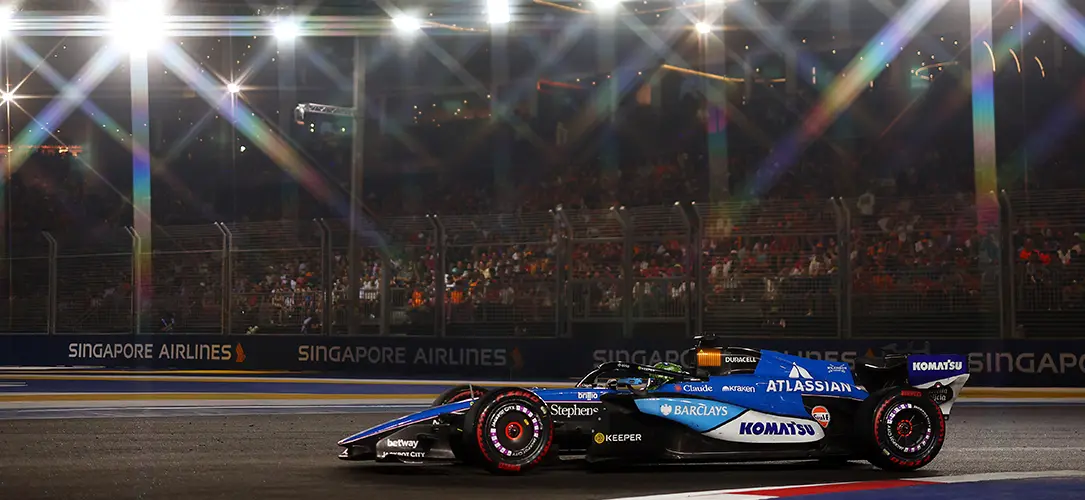
There was an example in Singapore, where we had to make a decision on performance versus actual potential reliability of the car with fuel consumption.
Essentially, we were discussing between ourselves whether we were going to be at risk of not finishing the race because of not having enough fuel in the car, versus the performance that that was added by what we were doing.
So, it came down to the metrics that we monitor live during the race which allowed us to pull the trigger and take action. That decision allowed us to finish the race effectively and not put ourselves in trouble.
Visit Betway’s F1 betting page for all the latest odds, markets and specials.