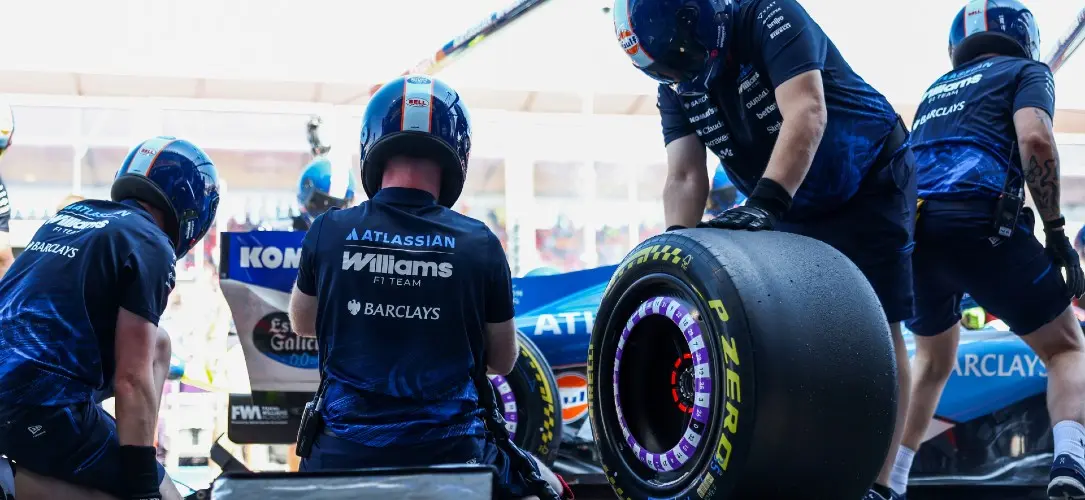




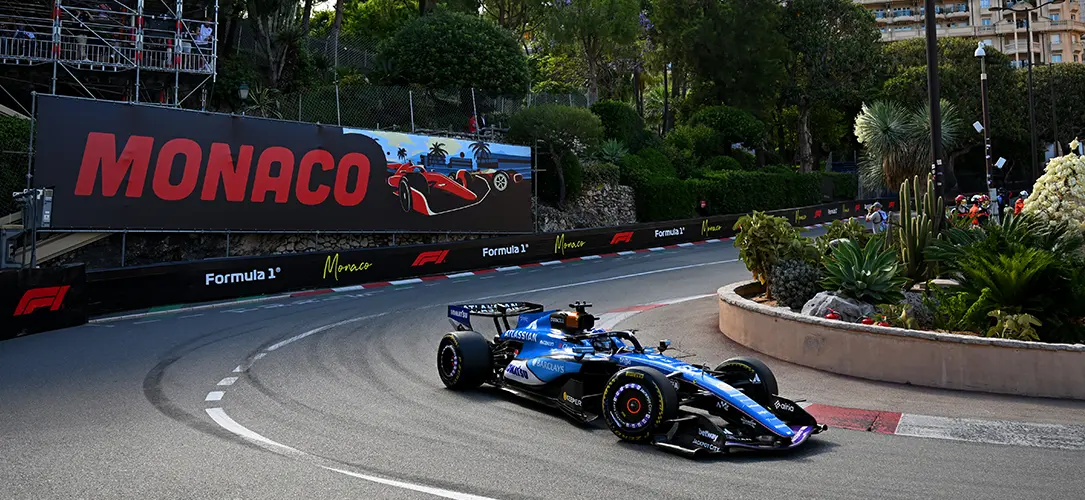
In our exclusive interview, Atlassian Williams F1 Team Principal James Vowles discusses Formula One's evolving regulations, as well as the importance of innovation and long-term planning.
The change in the internal combustion engine and electric power split for 2027 and 2028 means Williams will need to make significant powertrain decisions under the cost cap. How do you plan for regulation changes that are still being negotiated while still working on the car in front of you?
Those budgets weren’t initially inside our scheme of what we were planning for next year. Then changes happened. What it really highlights is that you need a level of agility in where you put your tokens, and when you put them in.
Large changes like power unit and cooling changes have to be prioritised. They may be a requirement for the following year, so it’s more about what else you can move around to get the best balance of performance going into the season.
These changes always happen. It’s part of our sport, and it’s the part I enjoy, because you dynamically have to review what you’re doing and sometimes get yourself into a better place than you were before.
You’ve talked openly about rebuilding Williams’ infrastructure from the ground up. How do you balance spending on long-term projects that do not show up in this year’s results against the pressure to perform right now?
I’m a simple being. All of the success I’ve been fortunate to have in my career has had almost nothing to do with the spend in that season. It was almost everything to do with the spend in the preceding three years. In other words, up to three seasons’ worth of investment in tools, systems and ways of thinking is what enabled us to go on and win.
You can get one year of success if you invest very quickly and very locally, but you cannot get continuation of that. So everything is about the long term.
Whatever happens on the weekend still hurts. It’s painful, but it’s a reminder of what we did wrong one or two years ago, not what happened that weekend.
What does the relationship between drivers and the team look like as you push together to extract more performance from the car?
It’s quite enjoyable to watch. If you provide a really interesting problem, it’s fascinating to see how the drivers and the team collaborate and get closer together as a result.
What breaks it apart is a lack of transparency, a lack of belief between both parties, or an incident that you don’t deal with properly there and then. What brings us together is a solution where both parties can combine and get a better result, which is what we have created here.
With 2028 and 2030 as exciting milestones on the horizon, how do you bring commercial partners on the journey and build shared excitement around that long-term vision?
I was fortunate enough to do a partner day recently in London, and I love them. I love them because it’s a room of shared belief and enthusiasm, in not just our history but our future.
The answer is in all of that. You need to present a credible path forward that is not fictitious. It’s made of fact all the way through, and it’s something you’re able to achieve. It will take a while. It’s a journey, it’s a transition, but in doing so you’ll bring the right partners on board.
Reflecting on the transformation of the team since you joined, what moment stands out to you as a real marker of progress?
They’re more recent than they are past, but there are two.
One is the chassis. What we did is unusual, or nearly impossible, for a team in season: we recreated a new chassis. It was a huge technical challenge with huge pressure. Next year’s chassis has effectively been brought forward into this year, so we have a good, stable base to work from.
I wasn’t prepared to sign off the same as we’ve done time and time again. This is true innovation from the same team that was here nine months ago, the same team that was hurting after the winter. They pulled themselves together and delivered a project that was much faster and much lighter than what we achieved previously, using new techniques and new developments. For me that’s an extraordinary feeling, because you can start seeing embryonic amounts of real innovation in the organisation.
The second was an incredible meeting late last night, which finished at about midnight for me. Everyone around the table shared how they are doing something completely different to how they were doing it just one week before. It’s really hard to break yourself out of the monotony of the day-to-day and change, and that’s happening in and around us.
How have the drivers contributed to the broader transformation of the team?
They are here day in and day out challenging us on how to be better. They both know what great looks like, and they will not relent until we are there.
What is your view on the power unit changes for 2027 and 2028?
They are good for the sport, and they will create a better show. I also think it’s a very good demonstration of how we as a sport put our hands up and make quick, effective change when we recognise that we haven’t put things in the perfect place.
When there is a conflict between the live telemetry and driver feedback, what is your process for determining which source carries more weight in the heat of a race?
I use a third source, which is lap times.
If the telemetry says it’s better and the lap times say it’s faster, but the driver is upset, you still continue down that path. Conversely, if the driver says it’s much better and the car data says it’s better, but the lap times don’t reflect it, you still stay with it. In other words, when there’s a dispute, use a third data source that is independent and accurate.
As the sport has become increasingly data-saturated over the last two years, how has your team’s definition of a competitive advantage fundamentally shifted?
I don’t think it has become saturated. In the 25 years I’ve been in the sport, data has grown exponentially, year on year. It’s not always a smooth step, but it’s pretty close to it.
So I don’t think we’re saturated. I think we’re still on the voyage of making sure we’re logging data in the right way. Where I do see a difference is in quality. Because we’re trying to add data quickly, it’s sometimes not at the level we need, so you’re adding noise to what is a good system.
What it shows, and this is the case the world over, is that humans can’t keep up with the amount of data we’re generating now. You need more and more automated processes to stay on top of it.
What’s the best part of your job, and what’s the toughest?
The best bit is that every day you do something completely different. You interact with every part of the business, whether that’s commercial, aerodynamics, design or operations. You see human beings giving up nearly everything to move the business forward. It’s rewarding and humbling, and it’s unique. I don’t think there are many jobs like it.
Formula One is full stack. We do everything from the idea, to the creation, to the R&D and production, to testing on track, and then to the commercialisation of it. Very few businesses do that end to end, and I’m fortunate to be part of it.
The toughest part is that you can’t let a bad moment pull you down, because if you do, you’ll pull the business down with you. You have to accept that when you’re stomach-punched, you stand back up taller.
Visit Betway’s F1 betting page for all the latest odds, markets and specials.