



The pulsating victory over Manchester United in midweek proved that West Ham are on the cusp of challenging the elite clubs once again
For those of us who rely on the comforts of blind loyalty to make up for the interminable mediocrity of following an unglamorous football club, the concept of having a second team is a difficult one to grasp.
Keeping an eye out for scores in which acquaintances have a vested interest is one thing.
But to feel any meaningful emotion at what the results throw up? Unthinkable.
Yet the one club who have always come closest to boasting a soft spot in my own affections – and those of many others judging by the widespread sentiment shown towards their final game at the Boleyn Ground this week – are West Ham.
For wherever your loyalties may lie, it is impossible not to feel a pang of appreciation for what the Hammers have given to English football over the years.
Romantic talk of the ‘West Ham way’ is often be met with derision, but the perceived tradition to which it alludes is testament to a former glory of which we have all been able to feel a part of.
The 11 players who achieved England’s only international triumph in the 1966 World Cup final were drawn from eight different clubs across the country.
But as the iconic bronze statue to which supporters flocked like pilgrims before kick-off on Tuesday – showing off captain Bobby Moore held aloft on the shoulders of the scorers of all four goals in Sir Geoff Hurst and Martin Peters – reminds us, the most influential figures in that victory belong in claret and blue.

That sole success has allowed all future generations to cling to the knowledge that, despite not being fortunate enough to witness it, we as a nation have given more to the global game than a gluttonous league to showcase its stars.
Even during the 50 years of hurt since, it is many of the graduates from the ‘Academy of Football’ –words emblazoned into the asphalt over which so many promising players have trodden – who have helped ensure that the last half century has at least been painful, rather than instantly forgettable.
Yet instead of staying with West Ham, it is telling that former prospects such as Frank Lampard, Rio Ferdinand, Joe Cole – even Michael Carrick, who returned once more this week with Manchester United – have chosen to spend their finest years elsewhere.
As a result, while black cabs ferried the trophy winners of yesteryear around the pitch and onto a stage erected in the centre circle following the final whistle, the more recent alumni such as Marlon Harewood and Carlton Cole were left up in the stands.
As Cole admitted when acknowledging the raucous reception that greeted him nevertheless, his cult hero status has more to do with his unwavering effort rather than any mesmerising ability as a player.
Perhaps it is this shift in West Ham’s standing that has denied Mark Noble – once again named as man of the match in the final game on the only home pitch he has ever known – the international honours that his performances this season have deserved.
The crack in his voice was audible even above the intermittent tannoy system as the fans declared that he was “too good for England”.

For while West Ham might consider themselves part of English football royalty, they have never lost their common touch.
Even their signature song – lamenting the search for a fortune that is always hiding – which echoed around the grand old stadium relentlessly for one final, extended encore, carries a melancholic note to which most can relate.
Yet if Tuesday night’s pulsating victory over the most successful team in Premier League history – orchestrated by players of real class in Dimitri Payet and Manuel Lanzini – proved one thing, it is that West Ham are on the cusp of challenging the elite once more.
It has been 30 years since West Ham have achieved anything of note in Europe.
Yet the steady flow of extra revenue that will come with the move to the Olympic Stadium should ensure that famous stories such as Trevor Brooking’s slaloming goal through the mud against Eintracht Frankfurt – recounted on Tuesday night by the man himself in the exact same spot that it was completed – are soon updated.
Dreams do not always need to inevitably fade and die.
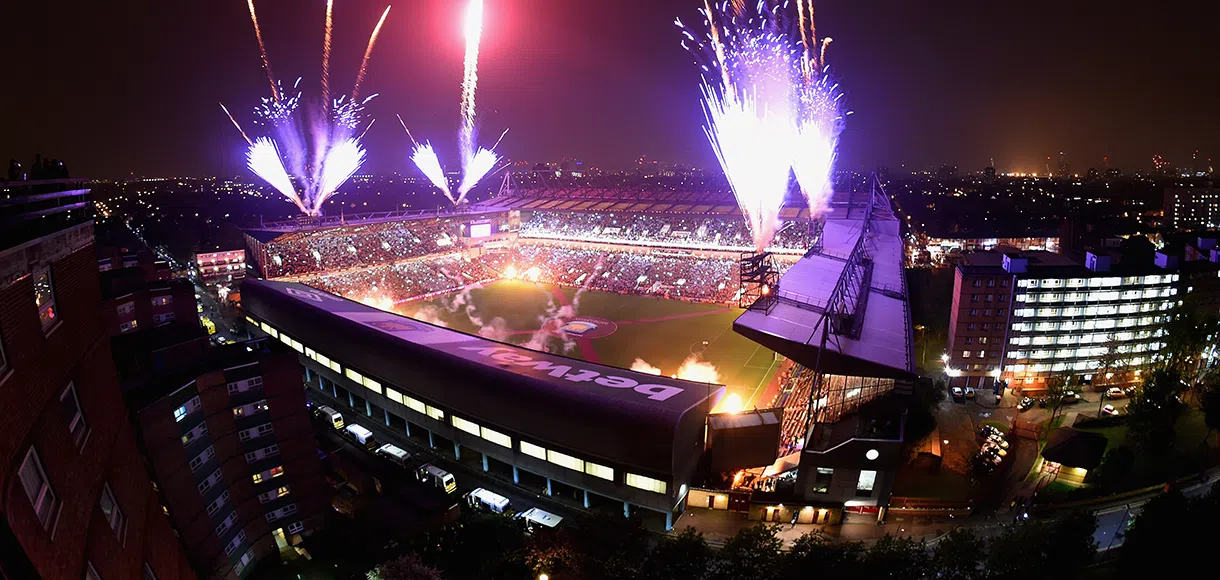
The soggy yet spectacular farewell was a wonderful, wistful tribute to everything that will be missed about the Boleyn.
But it was also a reminder of exactly why the time has come to finally turn the lights out.
Watch episode four of the Betway Academy, where West Ham players Manuel Lanzini and Adrian teach the amateurs the art of finishing
READ: Farewell, Boleyn: West Ham and Premier League supporters share stadium memories
READ: A few of our favourite things: What fans home and away will miss most about the Boleyn