


Which key British horse racing fixtures do you need to be aware of? Explore our calendar to learn more about the biggest fixtures that you should know about.
The British horse racing calendar has many fixtures that you should be aware of, with various challenges being posed to horses, jockeys and trainers. Whether you are a seasoned bettor or a newcomer, read on to uncover some of the most important British horse racing fixtures.
Highlights of the British horse racing calendar
Meetings are held year-round in the British horse racing calendar, with numerous events and races to keep in mind. Containing a mixture of both flat racing and jump racing, there’s much to enjoy – but it can also be a lot to take in. Below is a chronological list of some of the fixtures we think you should highlight in your own racing calendar!
January
Despite January not having so many massive events, it doesn’t mean that there’s no racing at all. In fact, the British horse racing calendar wastes no time and includes many events even on New Year’s Day. Cheltenham Racecourse has plenty of action to start the year as it hosts seven races, including a Premier Handicap with the Betfair Exchange Handicap Chase taking place.
January also has races that set the scene for major festivals in the spring, featuring numerous high-calibre horses. Whether it’s the Cotswold Chase showcasing potential challengers for the Cheltenham Gold Cup, or the Great Yorkshire Chase at Doncaster displaying the best staying handicappers, you won’t be short of races to combat the January blues.
February
February is a month packed with jump races and trials for upcoming majors. Early February contains events like William Hill Super Saturday that prepares competitors for Cheltenham Festival’s championship races – including Grade 2 races such as the Denman Chase and the Game Spirit Chase.
Moving to later in the month, Doncaster Racecourse hosts the Virgin Bet Grimthorpe Chase which is an iconic steeplechase and a crucial test for the Grand National.
March
Cheltenham Festival
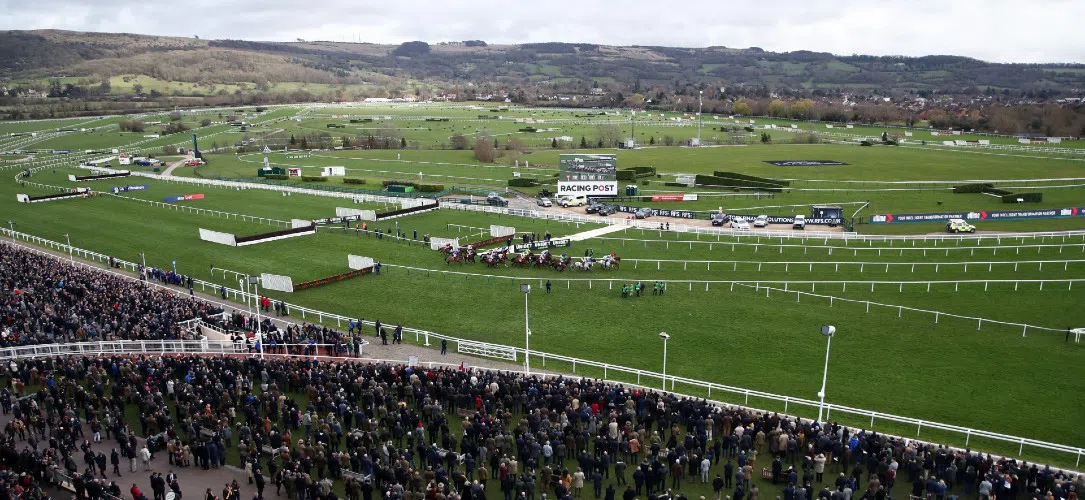
Cheltenham Festival is the biggest event in the British horse racing calendar, taking place annually in March over the course of four exhilarating days. Only the best horses can be seen competing at this prestigious event, with races such as the Gold Cup, Champion Chase, Champion Hurdle, and the Stayers’ Hurdle just some of the biggest ones held here.
The Champion Hurdle occurs on the opening day of the festival, and is not only a Grade 1 hurdle race, but the biggest hurdle race in the British racing calendar. Established in 1927, the total prize pot for this fixture stands at around £450,000.
The most important minimum-distance race on the National Hunt calendar is the Champion Chase which is held on the second day. The steeplechase has been run since 1959 and holds a prize fund of around £400,000.
The third day is home to the Stayers’ Hurdle, which is the leading long-distance hurdle event in the National Hunt calendar. It is a tough challenge, testing stamina and jumping ability over 3 miles with 12 hurdles.
The festival then culminates on the final day with the Cheltenham Gold Cup. This is the most-valuable non-handicap chase in Britain with its prize fund standing at roughly £625,000. It poses a challenge of 3 miles and 2½ furlongs with 22 fences to jump, meaning only the very best horses and jockeys can be victorious.
If you want to learn more about this esteemed festival, take a look at our Cheltenham blog page where you can find all the information you need – including our complete Cheltenham Festival guide.
April
Grand National
When looking at British horse racing fixtures, the Grand National is by far the most-valuable jumps race; boasting a prize fund of over £1 million.
It is annually held at Aintree in April during the Grand National Festival and has been run since 1830. The Grand National is a handicap steeplechase with 30 fences to jump over 4 miles and 2½ furlongs, making it the most difficult and truest test any horse and jockey can face on the calendar. A win here etches your name into the history of the sport.
Scottish Grand National
The Scottish Grand National is a major and historic event that was established in 1858. Held in April at Ayr Racecourse about a week after Aintree’s Grand National, it is Scotland’s most highly regarded jumps race and holds a Class 1 Premier Handicap Status. It is run over about 4 miles with 27 fences and offers around £200,000 in prize money.
May
The Guineas Festival
The Guineas Festival is a two-day flat racing event that occurs at Newmarket Racecourse at the start of May and hosts a pair of British Classic Races. These races are the 2,000 Guineas and the 1,000 Guineas.
The 2,000 Guineas is open to both colts (male horses) and fillies (female horses) over the age of three, taking place on day one of the festival over the distance of 1 mile. Notably, this is currently the first of five British Classic races to be run in a year, as well as being the opening leg of the Triple Crown (which is followed by the Epsom Derby and the St. Leger).
The 1,000 Guineas is open to fillies over the age of 3 and is run over a mile. It has been run since 1814 and takes place on the second day of the festival, becoming the second of the 5 British Classic races to be run in a year.
June
Epsom Derby
Held at the Derby Festival, the Epsom Derby is run in early June at Epsom Downs Racecourse. This flat race is Britains richest, and out of the five classics it’s the most prestigious. Serving as the middle leg of the Triple Crown, those who have already won the 2,000 Guineas will be desperate to come out on top here.
Royal Ascot
Royal Ascot is an event annually held at Ascot Racecourse in June and takes place over five days. It is known for world-class racing and attracts 300,000 visitors a year including the attendance of the Royal Family.
This historic event was founded in 1768 when the first Royal meeting took place and now features 35 elite flat races. Royal Ascot hosts the Gold Cup, which is a flat race that draws top-class horses from around the globe to test their stamina. It’s Britains most valuable race meeting, with a total pot of £10.65 million in prize money to be won.
July
The July Festival
This highly respected event is set at Newmarket Racecourse in early July and takes place over three days. The July Festival draws attention from top-class horses, trainers, and jockeys, primarily due to the July Cup sprint race on the third and final day. This race is highly significant and is greatly renowned, with winners often being crowned as the champion sprinter in Europe.
King George Weekend
Another event that takes place at Ascot Racecourse is King George Weekend, which is a prestigious two-day flat racing event. Held annually in late July, this ranks among the most important meetings at Ascot, following Royal Ascot in June.
This event holds the King George VI and Queen Elizabeth Stakes, which is Britains most admired open-age flat race. It has been run since 1951 and over the years has featured some of the most celebrated horses in the recent history of the sport.
August
Ebor Festival
Annually held at York Racecourse, Ebor Festival is certainly a highlight of the flat racing calendar. It’s a fantastic four-day affair that takes place in late August and is one of the final major meets of the flat racing season, hosting races such as the Ebor Handicap. This major handicap flat race rounds off the festival on the final day, holding an eye-watering prize fund of £500,000.
September
St. Leger Festival
The St. Leger Festival is one of the biggest events to feature in the flat racing season, taking place over four days in September at Doncaster Racecourse.
With thousands of people in attendance, day three is the one to look out for due to the St. Leger Stakes: this Grade 1 flat race completes the Triple Crown following on from the 2,000 Guineas and the Epsom Derby, and takes place over 1 mile, 6 furlongs and 115 yards. Being the oldest ‘British Classic’ race, it has great history and is also the last of the five that is run every year.
October
Marking the beginning of the core National Hunt jump season, October includes key opening meetings. This encompasses races like the Cheltenham Showcase meeting and the Chepstow Jump Season Opener, both of which help to increase interest for the upcoming winter jump racing calendar.
October is also the month which concludes the flat racing season and contains Britains richest race day: the QIPCO British Champions Day at Ascot Racecourse. This involves multiple Group 1 races such as the Champion Stakes and the Queen Elizabeth II Stakes, which is the perfect finale.
November
The Betfair Chase
Taking place in November at Haydon Park, the Betfair Chase is a Grade 1 National Hunt Steeplechase, and is often considered to be a key trial for the Gold Cup – run over 3 miles and 1½ furlongs, with 19 fences to clear. This is the first high level contest for the British jump season, and its prize fund stands at around £200,000. It is also the first race of the Chase Triple Crown, which also includes the King George VI Chase at Kempton and the Cheltenham Gold Cup.
Coral Gold Cup
The Coral Gold Cup is a Premier Handicap steeplechase that occurs at Newbury Racecourse, and is usually in late November. One of the more notable British horse racing fixtures, this can serve as a crucial trial for the Cheltenham Gold Cup and the Grand National. It has been run since 1957 and poses the challenge of 21 fences over 3 miles and 2 furlongs, holding a prize fund of about a quarter of a million pounds.
December
Tingle Creek Festival
This two-day event is annually held in early December at Sandown Park Racecourse. The highly esteemed Tingle Creek Festival has 13 fixtures, with the feature race being the Tingle Creek Chase. This steeplechase was established in 1969 but has only been run in its current format since 1994 as it used to be a handicap race. As one of the top two-mile meets in the British racing calendar, the race also serves as a trial for Cheltenham’s Champion Chase.
King George VI Chase
When looking at chases in the British racing calendar, the King George VI Chase is considered to be the second most prestigious – behind only the Cheltenham Gold Cup.
It’s a flat race held annually on Boxing Day at Kempton Park, run over 3 miles and often displaying top-level horses that may see future success at the Gold Cup. And unsurprising, it also attracts elite trainers and jockeys, which certainly makes it one to look out for.
Welsh Grand National
The Welsh Grand National is held at Chepstow in Wales at the back end of December. Much like the Grand National, it is also a handicap steeplechase but run at a reduced distance of 3 miles and 6½ furlongs with 23 fences to jump. It has a purse of £170,000, has been run since 1895, and is often a good indicator of which horses will see success at races like the Cheltenham Gold Cup or Grand National.
Where can I bet on British race meetings?
Fancy your chances at betting on a few races now that we’ve run you through some of the key British horse racing fixtures? Head over to our horse racing odds page to find all the latest races and prices we have available!
Or, if you want to learn a little more before you dive into your betting, have a read of our guides on how to bet on horse racing and how to choose a racehorse to bet on. If it’s just the language you struggle with however, take a look at our horse racing terms glossary!