



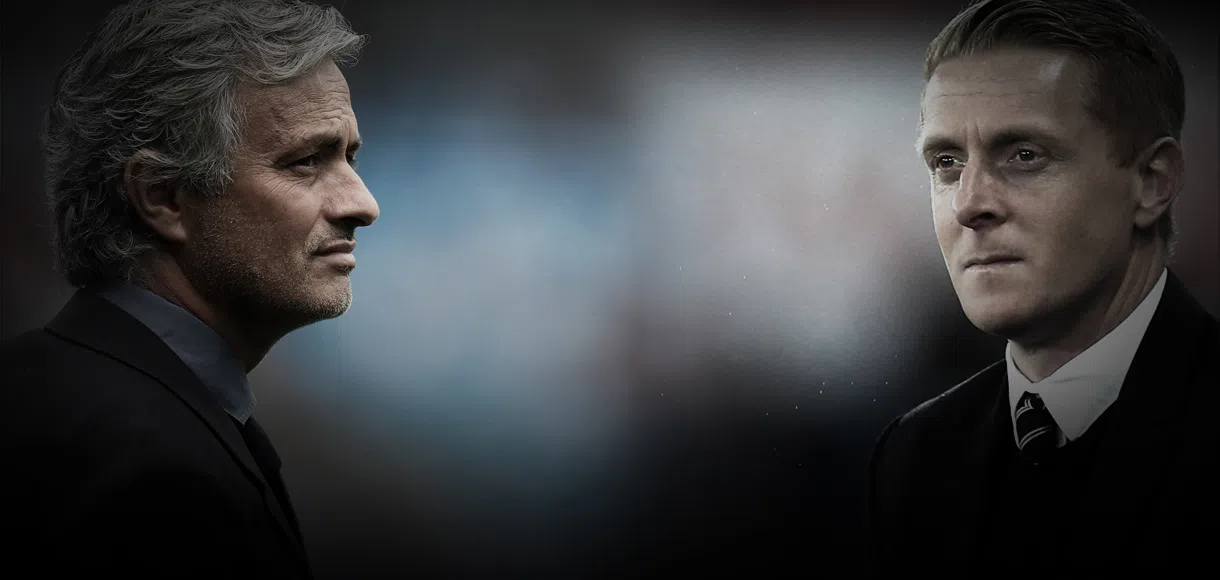
Garry Monk and Jose Mourinho are under pressure, but do they deserve more time? We analyse whether the 'new manager bounce' really exists
Given the number of air miles clocked by so many of their players over the international break, it is difficult to know just how much of a benefit the fortnight’s reprieve from domestic fixtures will have been for Jose Mourinho and Garry Monk.
Monk – priced at 1/4 – and Mourinho – at 3/1 – are by some distance the two men most likely to be the next top-flight managers to leave their posts.
And with two promoted sides in Norwich City and Bournemouth set to visit Stamford Bridge and the Liberty Stadium respectively, the pressure will be on both men to produce when the Premier League resumes this weekend.
Chelsea’s start to their title defence is, of course, the worst ever mounted by defending champions, with the Blues already dropping 25 points in 12 games – just two fewer than they let slip throughout the whole of last season.
Swansea, meanwhile, have just one victory against bottom-club Aston Villa to show for their last nine games – losing six, drawing two and scoring only five goals in that time.
Yet despite their recent struggles, the precariousness of their positions seems remarkable given the success that both men enjoyed last season.
After all, it was only seven months ago that Mourinho’s ruthlessly efficient Chelsea cantered to the Premier League title, with one of the most decorated managers in the game promising to build a dynasty with the Blues that would last a decade.
Monk, meanwhile, is a club hero who captained the Swans throughout their miraculous ascent from the bottom tier before leading the Welsh outfit to their highest-ever league finish of eighth in just his first full season in management.
Following their sudden fall from grace, we decided to take a look at the managerial statistics from the entire history of the Premier League.
Our aim was to find out if managers really are being sacked more often, at which clubs and at what stage of the season they are in the most danger, and if replacing the man at the helm really is of that much benefit in the short-term.
The answers may surprise you…
The bigger picture Out of the 185 full-time managers to have departed from clubs during the Premier League era, the vast majority have left their position after being sacked or departing by mutual consent.
In all, 119 (64 per cent) have been shown the door – nearly three times as many as those who have resigned of their own free will and six times the number who have moved to take up different jobs.
The quickening merry-go-round
This has seen an average of five managers removed from their positions each season – or one every 66 days.
However, the past five years alone have seen an average of eight sackings per season, proving that managers in the modern era are being afforded less time as the increased incentives for success and disastrous financial consequences of failure make the trigger fingers of chairmen increasingly twitchy.  Which clubs are the most cut-throat?
Perhaps it is Jose Mourinho who should be the more worried of the two this weekend.
Chelsea are officially the most sack-happy club in the Premier League, having fired a grand total of 11 managers during the Premier League era.
Eight of those dismissals have come during the Roman Abramovich era, with Guus Hiddink the only man to leave Stamford Bridge of his own accord since the Russian took over in 2003.
This included firing the person who had acquired more points (74) than any other sacked manager in Avram Grant, as well as the man with the highest league position at the time of losing his job after Roberto di Matteo was dismissed in 2012 when his team were third. Swansea, meanwhile, did not choose to part with a single manager on their way up to the Premier League – with Kenny Jackett resigning and Roberto Martinez, Paulo Sousa and Brendan Rodgers leaving for Wigan, Leicester and Liverpool respectively.
However, Monk will need no reminding that he only inherited the hot seat in February 2014 after Huw Jenkins decided to sack Michael Laudrup – despite the Dane leading the Swans to their first major silverware in the Capital One Cup and a maiden campaign in Europe the season before.
Winter woes
Certainly, both men have good reason to be nervous at this time of year.
As we approach the halfway point of the season with a busy Christmas period preceding a January transfer window, now is the perfect chance for a fresh start.
With 15 managers being let go during the month of November, this is officially the most common month for sackings during the season – closely followed by 14 in December.
Interestingly, 11 of those 15 managers were dismissed by clubs in the drop zone, with eight of them going on to be relegated anyway.
Given that Chelsea and Swansea do not currently find themselves in the bottom three and that both clubs ought to pull away from danger, neither Monk nor Mourinho appear to be dead men walking – although with two fixtures still to play in November that could yet change. Both managers can, however, find comfort in looking at the performances of managers who have lost their jobs in November in the past.
On average, teams who sack their manager at this stage of the season have amassed just nine points – compared to Chelsea’s current total of 11 and Swansea’s 13.
They also have had an average goal difference of -10, with Chelsea’s -7 and Swansea’s -4 suggesting their teams are certainly more competitive than those who have decided that a change was necessary.
Yet the stats do provide some insight as to where Chelsea and Swansea must improve if Mourinho and Monk are to keep their jobs.
The 15 clubs to fire their manager in November had scored an average of just 12 goals – the same number as Swansea, while they had conceded an average of 22 – one fewer than Chelsea’s 23.
It may be stating the obvious, but the numbers prove that Monk needs his team to find the net more often and Mourinho is reliant on keeping theirs intact on a more regular basis if both men are to avoid the boot.
Does the ‘new manager bounce’ really exist?
But is getting rid of a manager always a guaranteed quick fix? Well, not according to the numbers.
Swansea’s aims for the rest of the season may perhaps be a little harder to define, but Abramovich will clearly expect Chelsea to secure a top-four spot.
Harry Redknapp currently holds the record for the biggest positional improvement after taking over a new club, having guided Spurs from bottom to eighth in 2008/09.
With Chelsea currently languishing in 16th position, should the Blues slip any further and the Russian decide to make a change then the new incumbent will therefore have to achieve the greatest bounce effect in Premier League history to ensure Champions League football next season. Tellingly, Redknapp also shares the record for the biggest positional drop after taking over the reins – with Southampton slipping from 16th to bottom of the league under his guidance in 2004/05.
Such a fact simply underlines the unpredictable consequences of making a change, with only 47 per cent of managers that have been appointed during the season going on to improve upon the position that they inherited.
Indeed, the 86 teams to replace their managers during the season throughout Premier League history have only enjoyed an average positional improvement of just one single place in the league table.
Two managers have already lost their job this season – and if history is anything to go by then that number is set to increase significantly before the campaign is through.
Such is the short-term nature of the Premier League sack race, how their sides fare this weekend may just decide whether or not that list includes Monk and Mourinho.