


Games with competitive multiplayer are a natural fit for eSports, but there have been many failures and few successes - we explore why
The rise of eSports has had a transformative effect on the gaming industry and sent ripples out into other sectors, including online betting. This in turn has had a profound impact on game development – with a new market and a new way to capture players’ imaginations, many developers have started working with eSports firmly in mind.
It’s no surprise that developers are turning to eSports to make profitable, successful games. Major tournaments attract tens of millions of viewers and the eSports industry is already worth around $750 million.
Many games that have competitive multiplayer are a natural fit for eSports. That is, after all, how eSports came about to begin with. However, it can actually be quite difficult to convert an existing game into an eSports title, often because the changes might alienate the game’s existing fan base.
If fast, exciting gameplay needs to be slowed down for the benefit of viewers trying to keep up, current fans might rebel. This has put unprecedented pressure on developers to keep their games finely tuned.
For example, David Kim, the lead designer of Starcraft 2, receives near-constant abuse for the changes he’s made to the game’s balance over the years. The most contentious change was the addition of the ‘Swarm Host’ unit, which, according to some fans, ‘broke competitive play’.
This culminated in one fateful tournament that saw Kim “Soulkey” Min Chul use Swarm Hosts to grind down a Terran player in a morale-sapping war of attrition.
Online competitive games need to be constantly monitored to prevent any one dominating strategy. This can be extremely challenging, especially in asymmetrical games. And on top of that, it can be almost impossible to please all fans; one player’s much-needed overhaul is another player’s nightmare.
However, there are success stories. Last year’s 6.86 patch for Dota 2 was widely seen as having improved the game’s balance and there were relatively few complaints.
These changes to the meta have a real impact in the eSports world. The 6.86 patch produced a string of thrilling tournament matches and has even been credited with aiding Alliance and Na’Vi’s return to the fore.
These things not only matter for the professional players but for the viewers too. 6.86 helped playmaking heroes feature more prominently, making games more entertaining. After all, entertainment is what eSports all boils down to.
At the time of writing there is another patch for Dota 2 – 6.87 – due out in just a couple of days, landing right before the Manila Major qualifiers. The teams will have to adjust quickly and it will be fascinating to see how the new changes affect the game.
Keeping players on their toes in this way is partly what keeps a successful game in play. League of Legends has kept itself relevant in upgrades and tweaks via weekly patch-based content. No one would buy a LoL 2. Why? There’s simply no need for it.
It’s important to remember that many of these current top eSports titles weren’t necessarily designed with eSports in mind. Now developers can release a game that they hope will find the right balance for amateurs and professionals alike.
They don’t always succeed. Take Evolve. Most eSports are either based on skill or strategy; the appeal of MOBAs stems from the massive pool of playable characters, items, builds and an array of ways to throw off your opponents. No one match will feel the same.
With games like Counter Strike, the core mechanics comes down to muscle memory and skill. Yet you simply could not find complexity in either of those fields with Evolve. It didn’t translate well to the professional arena.
But this is just one tombstone in the vast graveyard of failed eSports games. Downgate and Infinity Crisis, both developed with eSports in mind, felt stale from the get go, and struggled to compare to established eSports titles. Infinity Crisis felt like a bastardised and unimaginative version of LoL, and was shut down three months after the beta – a testament to the fact that there is no substitute for creativity and originality.
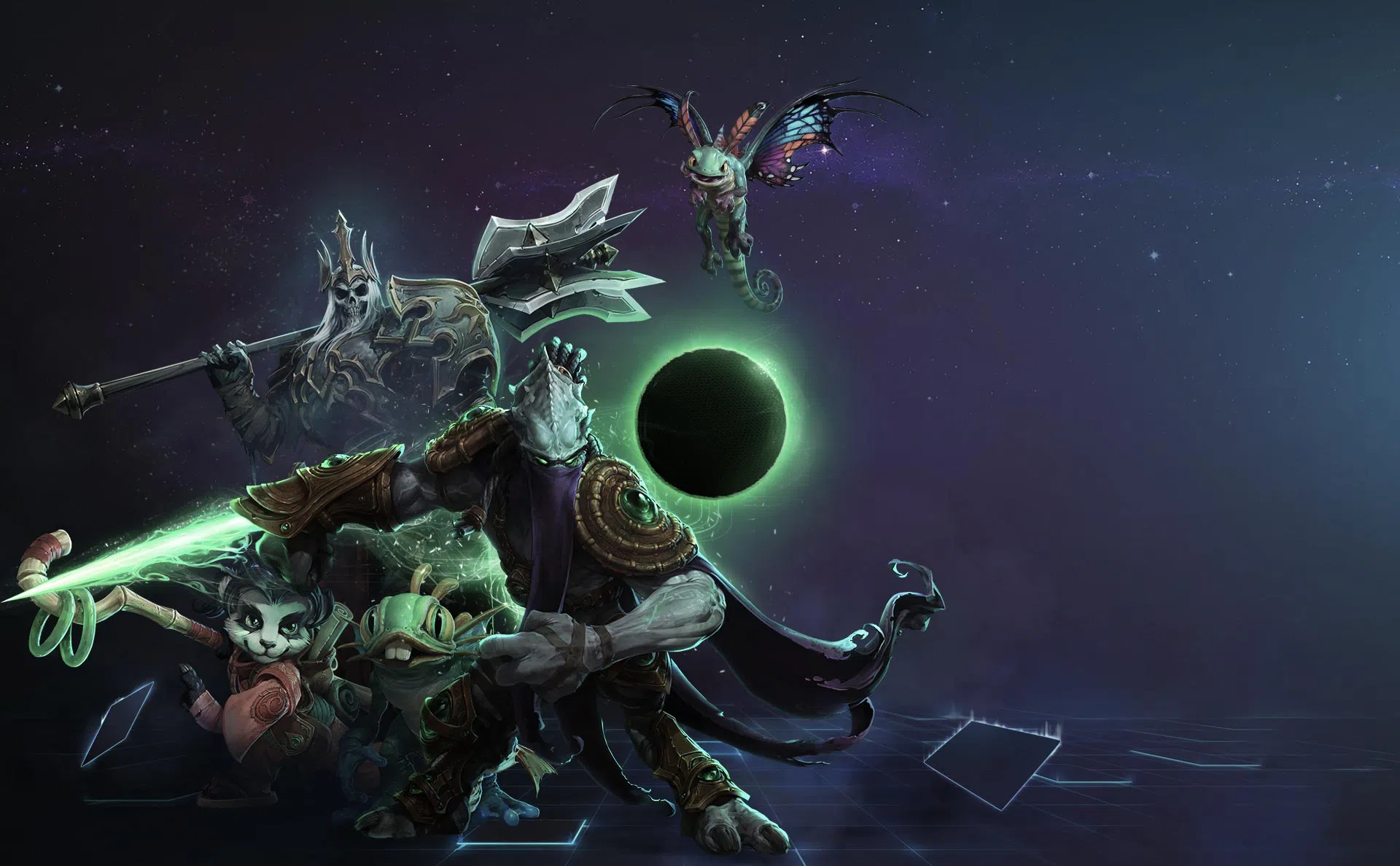
One exception to the trend is Blizzard’s Heroes of the Storm. It set out to challenge the MOBA rankings with a game that aims to draw in more players and viewers by removing a bunch of the complicated technicalities present in most MOBA games. Similarly, Smite looked to be just another LoL’s clone, but, like HotS, achieved just the right balance between fresh and familiar.
Mo Fadl, the global head of eSports for Wargaming, warns against designing a game solely for eSports. It’s clearly risky business and it’s easy to fall out of favour with fans; better to focus on developing a great multiplayer.
That said, many developers truly seem to be doubling down on eSports. For instance, when game-making veterans from Blizzard, Rockstar, Riot and Insomniac got together to make Vainglory, the goal was clear: to make a game that would be an eSports hit.
Everything from the fact that Vainglory was made for tablets and smartphones, to its streamlined MOBA gameplay, suggests that this game was made for eSports. Sure enough, it wasn’t long before the Vainglory Cup was announced and it joined the ranks of eSports staples.
Last year Vainglory was the fastest growing mobile game, generating over 20 million views on Twitch; impressive given Twitch is primarily a platform for console and PC streaming. And now major international eSports organisations, Team SoloMod, Alliance and Mousesports, are acquiring some of the most dominant Vainglory teams around.
2016 is set to see a slew of new eSports titles emerging. Blizzard is massively invested in eSports and is striving to bring more diversity to the industry with games such as Hearthstone and Overwatch. But does this mean there is little room for other developers to get in on the action?
CCP Games’ lead designer Andrew Williams put it well: “You don’t make an eSports game. eSports picks you”. Provide the right foundations and, if the community deems it worthy, a new eSports game will be born.
Check @BetwayeSports for the latest in eSports news and odds